



I SEE SAVAGES (я вижу дикарей)
EARLY one morning (рано утром) in harvest time (во время сбора урожая) I went out to my grain fields to cut down some barley (я выходил в мои зерновые поля срезать ячмень = собирать ячмень). The days were so very hot that it was pleasanter to rise before daylight (эти дни были такими жаркими, что было приятнее встать до восхода) and do the heavier part of my work before the sun was high (и сделать самую тяжелую часть моей работы прежде, чем солнце будет высоко).
On this morning of which I am telling you (тем утром, о котором я рассказываю вам), I started out while it was still quite dark (я вышел в путь, когда еще было довольно темно). I had been to the fields so often that I could have found the way with my eyes shut (я бывал в полях так часто, что мог бы найти путь с закрытыми глазами; to shut — закрывать).
As I went along (пока я шел; to go along — двигаться вперед /обычно по дороге, по улице/), I was surprised to see a light far over toward my side of the island (я был удивлен увидеть огонек вдалеке ближе к моей стороне острова). I stopped and looked (я остановился и стал смотреть). It was plainly the light of a blazing fire (это был явно свет ярко горящего костра; to blaze — гореть ярким пламенем; fire — огонь; костер).
Who could have built a fire there (кто мог бы развести там костер)?
Surely none but savages (определенно никто, кроме дикарей).
I was so much surprised (я так удивлен) that I stood still and wondered (что остановился как вкопанный и задумался).
What if those savages should find my grain fields (что если те дикари найдут мои зерновые поля)?
They would know at once that somebody had planted them (они сразу узнают = поймут, что кто-то их посадил), and they would never rest till they should find me (и не успокоятся, пока не найдут меня; never — никогда).
I could now see the blaze quite plainly (я мог теперь видеть довольно ясно/отчетливо). As the day dawned (день рассветал), I could also see the smoke rising above the trees (я мог также видеть дым, поднимающийся над деревьями). The fire was not more than two miles away (костер был не более чем в двух милях).
I hurried back to my castle as fast as I could run (я поспешил обратно к замку так быстро, как только мог бежать). I made everything on the outside of it look as wild as possible (я сделал, чтобы все снаружи его выглядело так дико = необитаемо, как возможно).
I climbed over the wall and pulled up the ladder after me (я перелез через забор и затащил лестницу за собой).
I loaded all my cannon (я зарядил все мои пушки), as I called the guns (как я называл ружья), that I had placed in the wall (которые установил в стене). I put everything in order for a siege (я привел все в порядок, как надо для осады).
Then I waited to see if any enemy would come near (затем я ждал увидеть, если враг приблизится = стал ждать приближения противника).
Two hours, three hours passed (прошли два часа, три часа), and there was no sight nor sound that was at all uncommon (и не было ни вида, ни звука, который был бы необычен). I began to wonder if, after all, the fire had been kindled by some accident (я начал задаваться вопросом, был ли = может быть, в конце концов, огонь зажжен каким-то случаем = случайно; to kindle — зажигать, разжигать /пламя, костер/; accident — /несчастный/ случай) and not by strange men (а не чужаками).
At last I could wait no longer (наконец я не мог больше ждать). I set up my ladder against the side of the rock (я приставил лестницу к боку скалы) and climbed up to a flat place above my castle (и залез на плоское место над замком). I pulled the ladder up after me (я втащил лестницу за собой) and then mounted to another landing (и затем взобрался на другую площадку; to mount — подниматься, восходить; to mount a ladder — взобраться на лестницу). I pulled it up a second time (я втащил ее во второй раз), and it now reached to the top of the great rock (и она теперь достигала верхушки большой скалы).
Here was the place I called my lookout (здесь было место, которое я называл моей смотровой площадкой).
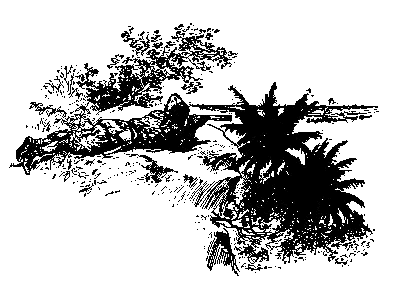
Very carefully I climbed up (очень осторожно я взобрался). I laid myself down upon the rock (я улегся на скале) and through my spyglass looked over toward the place where I had seen the fire (и через подзорную трубу посмотрел на место, где я видел огонь; spyglass — подзорная труба; to spy — шпионить, следить /за кем-л. — on/upon/; подглядывать, подсматривать; glass — стекло).
I could still see the smoke (я по-прежнему мог видеть дым). Yes, and I could see some naked savages sitting around a small fire (да, и я мог видеть несколько обнаженных дикарей, сидящих вокруг маленького костра).
I counted them (я посчитал их), and made out that there were no fewer than nine of the wretches (и вычислил, что там было не менее девяти этих убогих; wretch — жалкий человек; негодяй).
They surely did not need a fire to warm themselves by (им уж определенно не нужен был огонь, чтобы греться возле него), for the day was very hot (так как день был очень знойным). No doubt they were cooking something (без сомнения, они готовили что-то). Perhaps they were cannibals and were getting ready for one of their horrible feasts (возможно, они были каннибалами и готовились к одному из своих ужасных пиров; to get ready — готовиться: «становиться готовым»).
On the beach (на берегу: «на береговой полосе») not far from them (недалеко от них) I saw the two canoes in which they had arrived (я увидел два каноэ, на которых они прибыли).
The tide was now at its lowest (отлив был сейчас в своей самой низкой точке). When it returned and floated the canoes, they would probably go away (когда прилив вернется и поднимет каноэ, они, возможно, уплывут; to float — плавать; всплывать; держаться на поверхности воды).
This thought made me feel much easier (эта мысль заставила меня чувствовать гораздо спокойнее = в некоторой мере успокоила меня), for I was sure they would not wander far inland (так как я был уверен, что они не забредут далеко вглубь острова; inland — вглубь страны).
I waited and watched till the tide was again at the flood (я ждал и наблюдал, пока пока прилив не вернулся; flood — подъем воды, прилив; поток; наводнение).
Then I saw them all get into the boats and paddle away (затем я увидел, как они все уселись в лодки и погребли прочь). They seemed to be going around to the other side of the island (они, казалось, собирались идти вокруг /острова/ на другую сторону острова = обогнуть остров).
I could now breathe freely again (я мог опять дышать свободно). As soon as they were well gone, I armed myself and hurried across the land to see if I could get another sight of them (я вооружился и поспешил через местность посмотреть, мог бы я поймать другой вид их = увидеть их вновь).
I carried two guns on my shoulder (я нес два ружья на плече), two pistols in my belt (два пистолета за поясом), and a big sword at my side (и большую = длинную шпагу сбоку). You would have been frightened, had you seen me (вы были бы испуганы, если бы увидели меня).
It was a long, hard walk (это была долгая, трудная прогулка = долгий, трудный путь). But by and by I came to the hill (но вскоре я вышел к холму; by and by — вскоре) that overlooked the farther shore of the island (который возвышался над дальним берегом острова).
This I climbed (на него я взобрался). I scanned sea and land with my spyglass (я осмотрел море и землю через подзорную трубу).
Yes, there were the two canoes coming slowly around the coast (да = в самом деле, было два каноэ, медленно огибающих побережье).
But what was my surprise to see three other boats put off from a cove near by and hasten around to meet them (каково было мое удивление, когда я увидел, как три других лодки снялись из бухты рядом и поспешили им навстречу: «встретить их»)!
It seemed, then, that another party of savages had been feasting at the very spot (значит, видимо, другая партия дикарей пировала на том самом месте; to seem — казаться) where I had seen the first footprint in the sand (где я видел первый отпечаток ноги на песке).
I watched the canoes until all five were far out to sea (я наблюдал за каноэ, пока все пять не были далеко в море), on their way to the low-lying shore in the distant west (на своем пути к низкому берегу на отдаленном западе).
Then I went down to the place where the savages had been feasting (затем я спустился к месту, где /ранее/ пировали дикари).
What a dreadful sight met my eyes (какое ужасное зрелище встретило мои глаза; to meet — встречать)! The sand was covered with blood and bones (песок был покрыт кровью и костями). No doubt some poor captive had been killed there and eaten (без сомнения, какой-то бедный пленник был убит здесь и съеден).
I made up my mind (я принял решение) that if any other savages should ever come to my island for such a feast (что если какие-либо другие дикари когда-либо прибудут на мой остров для такого пира), I would not let them enjoy it (я не позволю им наслаждаться им).
I gathered up the bones and buried them in the sand (я собрал кости и похоронил их в песке; to bury — хоронить, зарывать в землю). Then I went slowly and sadly back to my castle (затем я медленно и печально пошел в замок).
After that I never felt quite safe at any time (после этого я никогда не чувствовал себе достаточно безопасно в какое-либо время). I dared not fire a gun (я не решался стрелять из ружья); I dared not build a fire (не решался разводить огонь); I dared not walk far from home (не решался бродить далеко от дома).
While awake (бодрствуя: «когда бодрствующий»), I was always planning how to escape the savages (я постоянно планировал/размышлял, как избежать дикарей; to escape — бежать, совершать побег; избежать /наказания, опасности и т. п./, спастись; отделаться). While asleep (когда я спал: «когда спящий»), I was always dreaming of dreadful things (мне всегда снились ужасные вещи).
Yet days and months passed by (однако дни и месяцы проходили), and still no other savages came (и все же никакие другие дикари не прибывали; still — до сих пор, все еще, по-прежнему; все же, тем не менее, однако).
early ['WlI], surprised [sq'praIzd], siege [si:G], enemy ['enImI], kindle [kIndl], spyglass ['spaIglQ:s], wretch [retS], ready ['redI], horrible ['hOrqbl], feast [fi:st], arrive [q'raIv], return [rI'tq:n], probably ['prOb(q)blI], breathe [brJD], hurry ['hArI], pistol [pIstl], surprise [sq'praIz], hasten ['heIs(q)n], blood [blAd], enjoy [In'GOI]
I SEE SAVAGES
EARLY one morning in harvest time I went out to my grain fields to cut down some barley. The days were so very hot that it was pleasanter to rise before daylight and do the heavier part of my work before the sun was high. On this morning of which I am telling you, I started out while it was still quite dark. I had been to the fields so often that I could have found the way with my eyes shut.
As I went along, I was surprised to see a light far over toward my side of the island. I stopped and looked. It was plainly the light of a blazing fire.
Who could have built a fire there?
Surely none but savages.
I was so much surprised that I stood still and wondered.
What if those savages should find my grain fields?
They would know at once that somebody had planted them, and they would never rest till they should find me.
I could now see the blaze quite plainly. As the day dawned, I could also see the smoke rising above the trees. The fire was not more than two miles away.
I hurried back to my castle as fast as I could run. I made everything on the outside of it look as wild as possible.
I climbed over the wall and pulled up the ladder after me.
I loaded all my cannon, as I called the guns, that I had placed in the wall. I put everything in order for a siege.
Then I waited to see if any enemy would come near.
Two hours, three hours passed, and there was no sight nor sound that was at all uncommon. I began to wonder if, after all, the fire had been kindled by some accident and not by strange men.
At last I could wait no longer. I set up my ladder against the side of the rock and climbed up to a flat place above my castle. I pulled the ladder up after me and then mounted to another landing. I pulled it up a second time, and it now reached to the top of the great rock.
Here was the place I called my lookout.
Very carefully I climbed up. I laid myself down upon the rock and through my spyglass looked over toward the place where I had seen the fire.
I could still see the smoke. Yes, and I could see some naked savages sitting around a small fire.
I counted them, and made out that there were no fewer than nine of the wretches.
They surely did not need a fire to warm themselves by, for the day was very hot. No doubt they were cooking something. Perhaps they were cannibals and were getting ready for one of their horrible feasts.
On the beach not far from them I saw the two canoes in which they had arrived.
The tide was now at its lowest. When it returned and floated the canoes, they would probably go away.
This thought made me feel much easier, for I was sure they would not wander far inland.
I waited and watched till the tide was again at the flood.
Then I saw them all get into the boats and paddle away. They seemed to be going around to the other side of the island.
I could now breathe freely again. As soon as they were well gone, I armed myself and hurried across the land to see if I could get another sight of them.
I carried two guns on my shoulder, two pistols in my belt, and a big sword at my side. You would have been frightened, had you seen me.
It was a long, hard walk. But by and by I came to the hill that overlooked the farther shore of the island.
This I climbed. I scanned sea and land with my spyglass.
Yes, there were the two canoes coming slowly around the coast.
But what was my surprise to see three other boats put off from a cove near by and hasten around to meet them!
It seemed, then, that another party of savages had been feasting at the very spot where I had seen the first footprint in the sand.
I watched the canoes until all five were far out to sea, on their way to the low-lying shore in the distant west.
Then I went down to the place where the savages had been feasting.
What a dreadful sight met my eyes! The sand was covered with blood and bones. No doubt some poor captive had been killed there and eaten.
I made up my mind that if any other savages should ever come to my island for such a feast, I would not let them enjoy it.
I gathered up the bones and buried them in the sand. Then I went slowly and sadly back to my castle.
After that I never felt quite safe at any time. I dared not fire a gun; I dared not build a fire; I dared not walk far from home.
While awake, I was always planning how to escape the savages. While asleep, I was always dreaming of dreadful things.
Yet days and months passed by, and still no other savages came.
I DISCOVER A WRECK (я обнаруживаю корабль, потерпевший кораблекрушение)
ONE day in May a great storm burst upon the island (одним майским днем большая буря обрушилась на остров; to burst — лопаться; разрываться; взрываться; разражаться). All day and far into the night the rain fell and the wind blew (весь день и глубоко ночью: «далеко в ночь» падал = шел дождь и дул ветер; to fall — падать; to blow — дуть), the lightnings flashed (сверкали молнии), and the thunder rolled (и катился гром = раздавались раскаты грома).
But I was used to such storms (но привык к таким штормам), and I minded it but little (и не обращал на него большого внимания). I stayed home in my castle (я оставался дома в моем замке), and felt very thankful that I had a place so safe and dry and comfortable (и чувствовал благодарность: «чувствовал /себя/ благодарным» за то, что у меня было такое безопасное, сухое и удобное место; to feel — чувствовать).
I sat up quite late (я не ложился спать довольно поздно = допоздна; to sit up — не ложиться спать; засиживаться до поздней ночи; бодрствовать), reading my Bible by the light of a little lamp I had made (читая Библию при свете маленького светильника, которую я сделал), and thinking of my strange lot in life (и думая о моем странной жребии в жизни). Suddenly I heard a sound which I felt sure was the noise of a gun fired at sea (вдруг я услышал звук, который, я чувствовал, наверняка был шумом ружья, выстрелившего в море).
I started up quickly (я быстро вскочил). I threw on my raincoat (я набросил дождевик) and mounted to my lookout on the top of the great rock (и взобрался на смотровую площадку на вершине большой скалы).
The rain had stopped and the wind was going down (дождь прекратился, и ветер стихал). It was now past midnight (было уже за полночь), and very dark (и очень темно).
A moment after I had reached my place (через мгновение после того, как я добрался до места) there was a flash of light that caused me to stop (была вспышка света, которая заставила меня остановится) and listen for another gun (и прислушаться, не будет ли еще /ружейного/ выстрела).
In a few seconds I heard it (через несколько секунд я услышал его). It seemed to come from that part of the sea (он, казалось, донесся с той части моря) where I was once caught by the strong current (где я был однажды захвачен сильным потоком; to catch — ловить) and driven far out in my boat (и отнесен далеко /в море/ в моей лодке; to drive — гнать).
I knew at once that the shots were fired from some ship in distress (я сразу понял, что выстрелы стрелялись с какого-то корабля в бедствии). Perhaps she was being driven upon the shore by the wind and waves (возможно, он /корабль — в англ. языке это слово женского рода/ был относим на берег ветром и волнами). Could I do anything to help the poor men on board (мог ли я сделать что-либо, чтобы помочь бедным людям на борту)?
With great labor and danger to myself (с большим трудом и опасностью для себя) I gathered some sticks and brush into a pile on the rock and set it on fire (я собрал палки и ветки в кучу на скале и поджег их).
The wood was not dry (дрова были не сухими), but when the fire was once kindled (но когда костер был разведен) it blazed up fiercely (он разгорелся неистово/яростно: «свирепо») and cast a light over all the rocks and trees about me (и отбрасывал свет на все скалы и деревья вокруг меня).
I felt sure that if there were sailors on the ship (я чувствовал уверенность, что если на корабле были моряки), they could not help but see it (они не могли не увидеть его /костер/). And no doubt they did see it (и без сомнения, они увидели его), for I soon heard another gun (так как вскоре я услышал другое ружье = другой выстрел).
All night long I kept the fire burning (всю ночь напролет я сохранял огонь горящим = поддерживал огонь); but no other sound besides the wind did I hear (но никаких других звуков, кроме ветра, я не слышал).
When it was broad day (когда наступил день; broad — широкий) and the mists had cleared away (и туман рассеялся: «дымки прояснились»), I turned my spyglass toward that part of the sea from which the sounds came (я обратил мою подзорную трубу в ту сторону, откуда доносились звуки; to turn — поворачивать; toward — /по направлению/ к).
Far away from the shore there was surely something (далеко от берега определенно что-то было); but whether it was a wreck or a ship under sail (но был ли это корабль, потерпевший кораблекрушение, или корабль под парусом), I could not tell (я не мог различить). The distance was too great (расстояние было слишком большим).
I watched it from time to time all day (я смотрел на него время от времени весь день). It did not move (он не двигался).
"It must be a ship at anchor (должно быть, это корабль на якоре)," I said to myself (сказал я себе = подумал я).
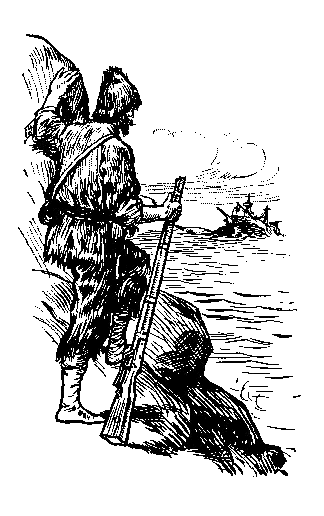
Early the next morning (рано следующим утром) I took my gun and went down toward that side of the island where the current had once caught me (я взял свое ружье и спустился к той стороне острова, где поток однажды захватил меня). When I had come to the shore there (когда я пришел к тому берегу: «к берегу там»), I climbed upon some rocks and looked out over the sea (я взобрался на скалы и выглянул на море).
The air was very clear now (воздух был теперь очень ясным), and I could plainly see the ship (и я мог отчетливо видеть корабль).
She was not at anchor (он был не на якоре). She was fast on some great rocks of which there were many in that part of the sea (он застрял на больших рифах, которых было много в этой части моря; fast — крепкий).
I saw that the masts of the vessel were broken (я увидел, что мачты судна были сломаны; to break — ломать), and that her hull was lying more than halfway out of the water (и что его корпус лежал более чем наполовину вне воды).
I thought of the sailors who must have been on board (я подумал о моряках, которые должны были бы быть на борту), and wondered if any had escaped (и задавался вопросом, спасся ли кто-нибудь). It seemed impossible (казалось невозможным) that any could have reached the shore through the furious sea (что кто-то смог добраться до берега через свирепое море) that was raging during the storm (которое бушевало во время шторма; rage — ярость, гнев, бешенство; to rage — беситься, злиться; быть в ярости, в гневе; бушевать, свирепствовать /о буре, эпидемии, страстях и т. п./).
"Oh, that one had been saved (вот если бы кто-нибудь спасся)!" I cried as I walked up and down the shore (восклицал я, ходя из стороны в сторону по берегу).
I wrung my hands (я ломал: «скручивал» руки; to wring — крутить, скручивать, выламывать; to wring one's hands — ломать себе руки), my lips were firmly set (мои губы были жестко сомкнуты: «крепко установлены»), my eyes were full of tears (мои глаза полны слез).
"Oh, that one had been saved!" I cried again and again (снова и снова).
It was thus that after so many lonely years without seeing a friendly face (было так = дело в том, что после столь многих одиноких лет, не видя дружеского лица) I longed to have at least one companion to talk with and to share my hopes and fears (я очень хотел иметь хотя бы одного товарища, чтобы говорить с ним и разделить мои надежды и страхи).
The sea was now quite calm (море было теперь довольно спокойным). Even among the rocks the water was smooth (даже между рифов вода была гладкой).
Seeing everything thus favorable (видя, что все было таким благоприятным), I made up my mind to get my canoe and go out to the wreck (я решил взять мое каноэ и отправиться к кораблю, потерпевшему кораблекрушение).
I hurried back to my castle (я поспешил обратно в замок) to get things ready for my voyage (чтобы приготовиться к моей поездке).
I packed a big basket with bread (я наполнил: «упаковал» большую корзину хлебом; to pack — упаковывать, запаковывать, укладывать вещи; тюковать); I filled a jug with fresh water (я наполнил кувшин пресной водой); I put a compass in my pocket (я положил в карман компас) that I might have it to steer by (который мог понадобиться, чтобы с его помощью править /судном/); I threw a bag full of raisins upon my shoulder (я перекинул сумку, полную изюма, через плечо; to throw — бросать).
Loaded with all these necessary things (нагруженный всеми этими нужными вещами), I went round to the place where my canoe was hidden (я пошел к месту, где было спрятано мое каноэ). I found her half full of water (я нашел его наполовину заполненным водой), for she had been lying there neglected for a long time (так как оно лежало там пренебрегаемое = без ухода долгое время).
With much labor I bailed the water out of her (с большим трудом я вычерпал из него воду) and got her afloat (и поставил на воду; afloat — наплаву). Then I loaded my cargo into her (затем я погрузил на него мой груз), and hurried home for more (и поспешил домой за следующим/за бóльшим /грузом/).
My second load (вторым грузом/второй загрузкой) was a bag full of rice (была сумка, полная риса), the umbrella to set up over my head for shade (зонт, чтобы установить его над головой для тени), another jug of water (другой кувшин воды), a cheese (сыр), a bottle of milk (бутылка молока), and about two dozen barley cakes (и около двух дюжин ячменных лепешек).
All these I carried around to my canoe (все это я отнес на каноэ). If there were men on board the wreck they might be in need of food (если на борту потерпевшего крушение корабля были люди, они могли бы нуждаться в еде: «быть в нужде еды»).
When I had arranged everything in good order (когда я все привел в хороший порядок; to arrange — приводить в порядок, расставлять; устраивать, организовывать, подготавливать; принимать меры; range — ряд, линия), I started out (я отправился в путь).
I kept the canoe quite close to the shore (я держал каноэ довольно близко к берегу) until I had rounded the point past which the dangerous current flowed (пока я не обогнул мыс, мимо которого текло опасное течение; point — точка; острие, выступающая часть; мыс). Being then in smooth water (будучи затем в тихой: «гладкой» воде), I struck boldly out toward the wreck (я направился отважно к остову разбитого судна; to strike — ударять; to strike out — направляться; to strike out for the shore — направиться к берегу).
Soon, however, upon looking a little ahead of me (вскоре, тем не менее, глядя немного вперед передо мной), I saw the second current flowing in a great eddy past a long line of half-hidden rocks (я увидел второе течение, текущее большим водоворотом мимо длинной линии полускрытых /водой/ скал).
As I looked on these rapid currents (когда я смотрел на эти быстрые потоки), my heart began to fail me (мое сердце начало отказывать мне). I knew that if I should be driven into one of them, it would carry me a great way out to sea (я знал, что если бы я попал: «был загнан/отнесен» в один из них, он вынес бы меня далеко в море). It would carry me so far that I should never be able to get back again (он вынес бы меня так далеко, что я ни за что не смог бы приплыть обратно).
Yet I was determined to persevere in my venture (и все же я был настроен упорно продолжать мое путешествие; to persevere — упорно добиваться, стойко, упорно продолжать).
discover [dIs'kAvq], burst [bq:st], lightning ['laItnIN], thunder ['TAndq], heard [hq:d], Bible ['baIbl], threw [TrH], raincoat ['reInkqut], caught [kO:t], distress [dIs'tres], anchor ['xNkq], during ['djuqrIN], firmly ['fq:mlI], many ['menI], jug [GAg], steer ['stIq], dozen ['dAz(q)n], arrange [q'reInG], rapid ['rxpId], driven ['drIv(q)n], determined [dI'tq:mInd], persevere ["pq:sI'vIq]
I DISCOVER A WRECK
ONE day in May a great storm burst upon the island. All day and far into the night the rain fell and the wind blew, the lightnings flashed, and the thunder rolled.
But I was used to such storms, and I minded it but little. I stayed home in my castle, and felt very thankful that I had a place so safe and dry and comfortable. I sat up quite late, reading my Bible by the light of a little lamp I had made, and thinking of my strange lot in life. Suddenly I heard a sound which I felt sure was the noise of a gun fired at sea.
I started up quickly. I threw on my raincoat and mounted to my lookout on the top of the great rock.
The rain had stopped and the wind was going down. It was now past midnight, and very dark.
A moment after I had reached my place there was a flash of light that caused me to stop and listen for another gun.
In a few seconds I heard it. It seemed to come from that part of the sea where I was once caught by the strong current and driven far out in my boat.
I knew at once that the shots were fired from some ship in distress. Perhaps she was being driven upon the shore by the wind and waves. Could I do anything to help the poor men on board?
With great labor and danger to myself I gathered some sticks and brush into a pile on the rock and set it on fire.
The wood was not dry, but when the fire was once kindled it blazed up fiercely and cast a light over all the rocks and trees about me.
I felt sure that if there were sailors on the ship, they could not help but see it. And no doubt they did see it, for I soon heard another gun.
All night long I kept the fire burning; but no other sound besides the wind did I hear.
When it was broad day and the mists had cleared away, I turned my spyglass toward that part of the sea from which the sounds came.
Far away from the shore there was surely something; but whether it was a wreck or a ship under sail, I could not tell. The distance was too great.
I watched it from time to time all day. It did not move.
"It must be a ship at anchor," I said to myself.
Early the next morning I took my gun and went down toward that side of the island where the current had once caught me. When I had come to the shore there, I climbed upon some rocks and looked out over the sea.
The air was very clear now, and I could plainly see the ship.
She was not at anchor. She was fast on some great rocks of which there were many in that part of the sea.
I saw that the masts of the vessel were broken, and that her hull was lying more than halfway out of the water.
I thought of the sailors who must have been on board, and wondered if any had escaped. It seemed impossible that any could have reached the shore through the furious sea that was raging during the storm.
"Oh, that one had been saved!" I cried as I walked up and down the shore.
I wrung my hands, my lips were firmly set, my eyes were full of tears.
"Oh, that one had been saved!" I cried again and again.
It was thus that after so many lonely years without seeing a friendly face I longed to have at least one companion to talk with and to share my hopes and fears.
The sea was now quite calm. Even among the rocks the water was smooth.
Seeing everything thus favorable, I made up my mind to get my canoe and go out to the wreck.
I hurried back to my castle to get things ready for my voyage.
I packed a big basket with bread; I filled a jug with fresh water; I put a compass in my pocket that I might have it to steer by; I threw a bag full of raisins upon my shoulder.
Loaded with all these necessary things, I went round to the place where my canoe was hidden. I found her half full of water, for she had been lying there neglected for a long time.
With much labor I bailed the water out of her and got her afloat. Then I loaded my cargo into her, and hurried home for more.
My second load was a bag full of rice, the umbrella to set up over my head for shade, another jug of water, a cheese, a bottle of milk, and about two dozen barley cakes.
All these I carried around to my canoe. If there were men on board the wreck they might be in need of food.
When I had arranged everything in good order, I started out.
I kept the canoe quite close to the shore until I had rounded the point past which the dangerous current flowed. Being then in smooth water, I struck boldly out toward the wreck.
Soon, however, upon looking a little ahead of me, I saw the second current flowing in a great eddy past a long line of half-hidden rocks.
As I looked on these rapid currents, my heart began to fail me. I knew that if I should be driven into one of them, it would carry me a great way out to sea. It would carry me so far that I should never be able to get back again.
Yet I was determined to persevere in my venture.
I MAKE ANOTHER VOYAGE (я предпринимаю еще одно путешествие)
WITH very great care I steered my canoe out to sea (с большой осторожностью я направил мое каноэ в море). I kept just within the edge of the current on my right hand (я держался точно у края потока по правую руку; within — в, внутри; edge — кромка, край; грань, граница). It carried me along at a great rate (он нес меня на большой скорости; rate — норма; ставка, тариф; темп; скорость, ход /как физическая характеристика/), but I did not lose control of the canoe (но я не терял управление каноэ).
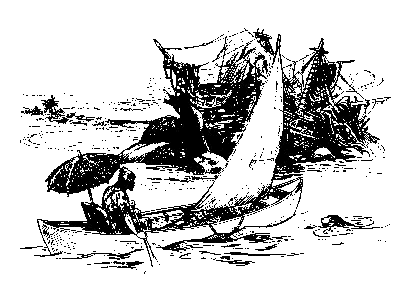
In about two hours I came up to the wreck (примерно через два часа я добрался до судна, потерпевшего кораблекрушение). It was a sad sight to look at (это было грустное зрелище: «это было грустное зрелище, чтобы смотреть на него»).
The ship lay partly on her side (корабль частично лежал на боку), and was jammed fast between two great rocks (и был крепко зажат между двумя большими рифами).
She looked like a Spanish ship (он выглядел, как испанское судно). She had been badly broken by the waves (он был сильно поломан волнами), and everything on her decks had been swept away (и все с палуб было смыто /в море/; to sweep — мести; to sweep away — сметать).
As I came close to her (когда я подплыл к нему поближе), a dog looked over her side and barked at me (пес выглянул через борт и залаял на меня; side — сторона, бок). When I called him he jumped into the sea and swam out to the canoe (когда я позвал его, он прыгнул в море и поплыл к каноэ).
I lifted him on board (я поднял его на борт), and found that he was almost dead with hunger and thirst (и обнаружил, что он был почти мертв от голода и жажды).
I gave him a barley cake (я дал ячменную лепешку), and he devoured it like a half-starved wolf (и он сожрал ее, как полумертвый от голода волк; to starve — умирать от голода). I then gave him a little water (затем я дал ему немного воды), but not too much lest he should harm himself (но не очень много, чтобы он не повредил себе = чтобы ему не стало плохо). He drank (он пил), and then looked up as if asking for more (а затем посмотрел вверх, как бы прося еще).
After this I went on board (после этого я взошел на борт). A sad sight met my eyes (печальный вид встретил мои глаза; to meet — встречать). For in the cookroom I saw two sailors who had been drowned (потому что в камбузе я увидел двух моряков, которые утонули), with their arms fast around each other (с руками крепко вокруг друг друга = крепко обнявшись).
I suppose (я предполагаю) that when the ship struck (что когда корабль ударился = сел на мель; to strike — ударять) the waves dashed all over her (волны хлынули через него) and the men had no way of escape (и у людей/экипажа не было никакого пути спасения). Those who were not swept overboard (кого не смыло за борт: «кто не был смыт за борт»; to sweep — мести, сметать) were drowned between decks (утонули между палубами).
Besides the dog there was no other live thing on board (кроме собаки, не было никого другого живого существа на борту).
I found some chests that had belonged to the sailors (я нашел несколько ящиков, которые принадлежали морякам). With much labor I got two of them into the canoe without stopping to look inside of them (с большим трудом я затащил два из них на каноэ, не останавливаясь, чтобы посмотреть внутрь их).
Besides these chests (кроме этих ящиков), I took a fire shovel and tongs (я взял лопату для огня = камина и щипцы), which I needed very much (которые мне были очень нужны). I found, also, two little brass kettles (я нашел также два маленьких латунных чайника; brass — латунь, желтая медь), a gridiron (рашпер /решетка для поджаривания мяса/; grid — решетка, сетка; iron — железо), and a large copper pot (и большой медный горшок/большую медную кастрюлю).
The tide was now setting in toward the island again (прилив направлялся к острову опять). So, with the few goods I had found and the poor dog, I started for home (поэтому с немногими вещами, которые я нашел, и бедным псом я отправился домой; goods — товар; товары; вещи, имущество).
By keeping on the outside of the eddying current (держась снаружи крутящегося потока; eddy — маленький водоворот, воронка; to eddy — крутиться в водовороте) I had no trouble in bringing the canoe safe to land (у меня не было трудностей привести каноэ невредимым к суше). The sun was almost down (солнце почти зашло) when I anchored her in a little inlet just off the point of rocks (когда я поставил его на якорь в маленькой бухте как раз скалистым мысом).
I was so tired (я был таким уставшим) that I could do nothing more that day (что в тот день я больше не мог ничего делать). So, after eating my supper (поэтому, съев ужин), of which I gave the dog a good share (из которого я дал собаке хорошую долю), I lay down in the canoe and went to sleep (я лег в каноэ и заснул; to lie — лежать; to lie down — ложиться).
I slept very soundly (я спал очень крепко; sound — здоровый, крепкий; глубокий /о сне/), and did not wake until morning (и не просыпался до утра).
In looking over my goods (осматривая товары/вещи), I made up my mind to store them in my new cave in the woods (я решил хранить/складировать их в моей новой пещере в лесу). For that was much nearer than my home castle (потому что она была гораздо ближе, чем мой родной замок).
When I opened the chests (когда я открыл ящики) I found several things that I was very glad to get (я обнаружил несколько вещей, которые я был очень рад получить).
In one I found two jars of very good sweetmeats (в одном я нашел две банки очень хороших засахаренных фруктов; jar — банка; кувшин; кружка; мера жидкости /= 8 пинтам = 4,54 л/). They were so well corked (они были так хорошо закупорены) that the salt water had not harmed them (что соленая вода не повредила им). There were two other jars of the same kind (были еще две другие банки того же рода = две другие подобные банки); but they were open at the top (но они были открыты сверху /у крышек/), and the water had spoiled the sweetmeats (и вода испортила засахаренные фрукты/конфеты).
In the other chest there were some good shirts (в другом ящике было несколько хороших рубашек), which I needed very much (которые мне были очень нужны). There were also about a dozen and a half of white linen handkerchiefs (там было также около полутора дюжин: «дюжины с половиной» белых льняных платков). I was very glad to find these (я был очень рад найти их), for they would be pleasant to wipe my face with on a hot day (потому что ими будет приятно вытереть лицо в жаркий день).
In a secret drawer of the first chest (в потайном ящичке первого ящика; drawer — выдвижной ящик; to draw — тянуть, тащить) I found three bags of Spanish money (я обнаружил три мешочка испанских денег). I counted eleven hundred pieces of silver (я насчитал одиннадцать сотен серебряных монет).
At the bottom of one of the bags there were six Spanish gold pieces, each worth about fifteen dollars (на дне одной сумки было шесть испанских золотых монет, каждая стоимостью примерно пятнадцать долларов). These were wrapped up in a piece of paper (они были завернуты в кусок бумаги).
At the bottom of the other bag there were some small bars of gold (на дне одной сумки было несколько небольших слитков золота). I suppose there was at least a pound of these yellow pieces (я предполагаю, там был по крайней мере фунт этих желтых слитков).
After all, I got very little by this voyage (в конце концов: «после всего», я получил очень мало от этого путешествия). I had no use for the money (я не мог использовать эти деньги: «не имел использования для денег»). It was worth no more to me than the dust under my feet (они обладали для меня не большей ценностью, чем пыль под моими ногами). I would have given it all for a pair of good shoes or some stockings for my feet (я бы отдал это все за пару хороших туфель или хороших чулок для моих ног).
After I had carried everything to my cave (после того, как я отнес все в мою пещеру) I took the canoe back to her old harbor on the farther side of the island (я отвел каноэ обратно в заводь на дальней стороне острова). Then I returned to my castle (затем я вернулся в замок), where I found everything in good order (где нашел все в хорошем порядке).
And now I began to live easily again (и теперь я снова начал жить вольготно; easily — легко; свободно, без труда). I was as watchful as before (я был столь же осторожен, как и раньше), and never went from my castle without looking carefully around (и никогда не уходил из замка, как следует не осмотревшись; carefully — тщательно, аккуратно; внимательно; заботливо; care — забота).
I seldom went to the other side of the island (я редко ходил на другую сторону острова). When I visited my cave in the woods (когда я навещал мою пещеру в лесу), or went to see my goats (или отправлялся посмотреть на моих коз), I took good care to be well armed (я заботился: «брал хорошую заботу», чтобы быть хорошо вооруженным).
lose [lu:z], control [kqn'trqul], sailor ['seIlq], handkerchief ['hxNkqtSi:f], gridiron ['grIdaIqn], worth [wq:T], wrap [rxp]
I MAKE ANOTHER VOYAGE
WITH very great care I steered my canoe out to sea. I kept just within the edge of the current on my right hand. It carried me along at a great rate, but I did not lose control of the canoe. In about two hours I came up to the wreck. It was a sad sight to look at.
The ship lay partly on her side, and was jammed fast between two great rocks.
She looked like a Spanish ship. She had been badly broken by the waves, and everything on her decks had been swept away.
As I came close to her, a dog looked over her side and barked at me. When I called him he jumped into the sea and swam out to the canoe.
I lifted him on board, and found that he was almost dead with hunger and thirst.
I gave him a barley cake, and he devoured it like a half-starved wolf. I then gave him a little water, but not too much lest he should harm himself. He drank, and then looked up as if asking for more.
After this I went on board. A sad sight met my eyes. For in the cookroom I saw two sailors who had been drowned, with their arms fast around each other.
I suppose that when the ship struck the waves dashed all over her and the men had no way of escape. Those who were not swept overboard were drowned between decks.
Besides the dog there was no other live thing on board.
I found some chests that had belonged to the sailors. With much labor I got two of them into the canoe without stopping to look inside of them.
Besides these chests, I took a fire shovel and tongs, which I needed very much. I found, also, two little brass kettles, a gridiron, and a large copper pot.
The tide was now setting in toward the island again. So, with the few goods I had found and the poor dog, I started for home.
By keeping on the outside of the eddying current I had no trouble in bringing the canoe safe to land. The sun was almost down when I anchored her in a little inlet just off the point of rocks.
I was so tired that I could do nothing more that day. So, after eating my supper, of which I gave the dog a good share, I lay down in the canoe and went to sleep.
I slept very soundly, and did not wake until morning.
In looking over my goods, I made up my mind to store them in my new cave in the woods. For that was much nearer than my home castle.
When I opened the chests I found several things that I was very glad to get.
In one I found two jars of very good sweetmeats. They were so well corked that the salt water had not harmed them. There were two other jars of the same kind; but they were open at the top, and the water had spoiled the sweetmeats.
In the other chest there were some good shirts, which I needed very much. There were also about a dozen and a half of white linen handkerchiefs. I was very glad to find these, for they would be pleasant to wipe my face with on a hot day.
In a secret drawer of the first chest I found three bags of Spanish money. I counted eleven hundred pieces of silver.
At the bottom of one of the bags there were six Spanish gold pieces, each worth about fifteen dollars. These were wrapped up in a piece of paper.
At the bottom of the other bag there were some small bars of gold. I suppose there was at least a pound of these yellow pieces.
After all, I got very little by this voyage. I had no use for the money. It was worth no more to me than the dust under my feet. I would have given it all for a pair of good shoes or some stockings for my feet.
After I had carried everything to my cave I took the canoe back to her old harbor on the farther side of the island. Then I returned to my castle, where I found everything in good order.
And now I began to live easily again. I was as watchful as before, and never went from my castle without looking carefully around.
I seldom went to the other side of the island. When I visited my cave in the woods, or went to see my goats, I took good care to be well armed.