



I SEE SOMETHING IN THE SAND (я вижу кое-что в песке)
WHEN the weather was fine I often went over to the other side of the island to look at my canoe (когда погода была хорошей, я часто ходил на другую сторону острова, чтобы посмотреть на мое каноэ).
Sometimes I spent several days at my summer house (иногда я проводил несколько дней в моем летнем доме). Then, going over to where the canoe was kept (затем, идя туда, где содержалось каноэ), I took short sails along the shore (я предпринимал короткие походы под парусом вдоль берега). These little voyages gave me a great deal of pleasure (эти маленькие путешествия доставляли мне много удовольствия; deal — некоторое количество; great deal of — много).
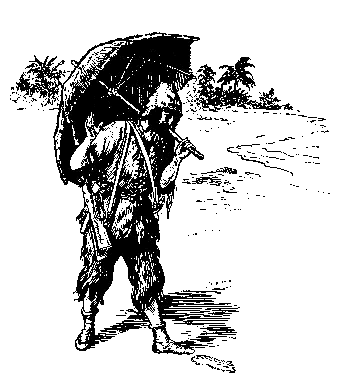
One morning as I was going to the canoe a strange thing happened (однажды утром, когда я шел к каноэ, произошла одна странная вещь).
I was walking slowly along and looking down (я шел медленно вдоль /берега/ и смотрел вниз), and what do you think I saw (и что вы думаете, я увидел)?
I saw the print of a man's naked foot in the sand (я увидел отпечаток голой ноги человека на песке).
The sight made me cold all over (это зрелище заставило меня всего похолодеть; all over — всюду, повсюду; /зд./ по всему телу).
I stood like one that had seen a ghost (я стоял как кто-то, кто увидел привидение). I looked around (я посмотрел вокруг/осмотрелся). I listened (я прислушался). I trembled (я дрожал; to tremble — дрожать; трястись).
I went to the top of a little hill to look farther (я пошел на верхушку маленького холма, чтобы посмотреть дальше). Then I walked up the shore and down the shore (затем я я прошел «вверх и вниз» = взад и вперед/туда-сюда по берегу). I saw no other tracks (и не увидел никаких других следов).
I went back to make sure that I was not dreaming (я пошел обратно, чтобы удостовериться, что я не увидел это во сне; to dream — видеть сон; dream — сновидение). Yes, there in the sand was the print of man's foot (да, на песке был отпечаток ноги человека). It showed the toes (он показывал = были отчетливо видны пальцы /ног/), the heel (пятку), and the sole of the foot (и ступню ноги; sole — подошва; ступня). I was not dreaming (я не видел сон = это был не сон).
My mind was filled with a thousand thoughts and questions (мой ум был наполнен тысячею мыслей и вопросов). Where was the man who made that track (где был человек, который оставил тот след)? Who was he (кем он был)? How did he get there (как он сюда попал)?
I was so frightened that I did not go to the canoe (я был так напуган, что не пошел к каноэ). I turned back and went to my castle as fast as I could (я повернулся и пошел к замку так быстро, как только мог).
Whether I went over by the ladder or through the hole in the rock (попал ли я /домой/ по лестнице или через отверстие в скале), I do not know (я не знаю = не помню). But I shut myself up as quickly as I could and began to get ready to defend myself (но я закрылся так быстро, как мог, и начал готовиться защищать себя; to get ready — готовиться: «становиться готовым»).
That night I could not sleep (той ночью я не мог спать). I lay in my hammock, and thought and thought (я лежал гамаке, и думал, и думал; to lie — лежать).
The track must have been made by an Indian (след, должно быть, оставлен индейцем) or some other wild savage (или каким-то другим дикарем; wild — дикий; savage — дикарь). This savage had come perhaps from the land that I had seen far across the sea (это дикарь, возможно, прибыл с земли, которую я видел за морем: «далеко через море»).
Perhaps he had come to the island alone (возможно, он прибыл на остров не один). Perhaps he had come with many others of his kind (возможно, он прибыл со многими другими его вида = такими же, как он). But where was he now (но где он был сейчас)?
I was so much afraid that I did not stir out of my castle for three days and nights (я был так сильно напуган, что не высовывался из замка три дня и три ночи; to stir — шевелиться; двигаться). I was almost starved (я чуть не умер от голода; to starve — голодать, умирать от голода), for I had only two or three barley cakes in my kitchen (потому что у меня на кухне было всего лишь две или три ячменной лепешки).
Little by little I became brave enough to go out again (мало-помалу я стал достаточно смелым = набрался смелости, чтобы выйти опять). I crept softly down to my fields to milk the goats (я пробрался потихоньку на мои поля, чтобы подоить коз; to creep — ползать; красться; пробираться). Poor things (бедные существа)! They were glad enough to see me (они были очень рады увидеть меня).
But every sound made me start and look around (но каждый звук заставлял меня вздрагивать и смотреть по сторонам/оглядываться). I fancied (мне казалось; to fancy — воображать, представлять себе) that I saw a savage behind every tree (что я видел дикаря за каждым деревом). I lived for days like some hunted thing (я жил дни = целый ряд дней, как какое-то преследуемое существо/существо, за которым охотятся; to hunt — охотиться /на кого-л.; особ. с гончими/; травить, гнать; преследовать) that trembles at its own shadow (которое дрожит от своей собственной тени).
And all because I had seen the print of a foot in the sand (и все потому, что я видел отпечаток ступни на песке)!
Little by little I grew bolder (мало-помалу я стал отважнее; to grow — расти; становиться), and I made up my mind to strengthen my castle (и решил укрепить замок). If savage Indians should indeed come and find me, I would be ready for them (если дикие индейцы в самом деле придут и найдут меня, я был бы готов к ним = к этому).
So I carried out earth and small stones (поэтому я притащил: «вынес» земли и небольших камней), and piled them up against the castle wall till it was ten feet thick (и уложил их у стены: «к стене» замка, пока она не стала толщиной в десять футов; to pile — складывать, сваливать в кучу; thick — толстый). I have already told you how strong it was at first (я уже рассказал вам, какой крепкой она была в самом начале), and how I had made a dense hedge of trees on the outside (и как я сделал плотную ограду из деревьев снаружи). It was now so strong that nothing could break through it (такой крепкой, что ничто не могло прорваться сквозь нее).
Through the wall at certain places (сквозь стену в определенных местах) I made five holes large enough (я проделал пять достаточно больших отверстий) for a man's arm to reach in (чтобы человеческая рука могла просунуться сквозь них; to reach — протягивать, вытягивать). In each of these holes I planted a gun (в каждом из этих отверстий я установил ружье; to plant — сажать /растения/; всаживать, втыкать; прочно ставить, устанавливать; plant — растение); for you will remember (ибо, как вы помните) that I brought several from the ship (я принес несколько /ружей/ с корабля).
Each one of these guns was fitted in a frame that could be drawn back and forth (каждое ружье было установлено в раму, которую можно было передвигать назад и вперед; to draw — тащить, волочить; тянуть). They worked so well in their places (они так хорошо двигались в своих местах = каждое в своем месте; to work — работать; двигать, передвигать) that I could shoot off all five of them in less than two minutes (что мог выстрелить из всех пяти менее чем за две минуты).
Many a weary month did I work before I had my wall to my notion (много изматывающих месяцев я работал, прежде чем я имел стену по своему видению = какую хотел; notion — идея, представление, понятие; намерение, желание). But at last it was finished (но наконец она была завершена).
The hedge that was before it grew up so thick and high that no man nor animal could see through it (ограда, которая была перед ней, выросла такой плотной и высокой, что ни человек, ни животное не могли видеть сквозь нее). If you had seen it (если бы вы увидели ее), you would not have dreamed there was anything inside of it (вам бы не приснилось = не подумалось, что было что-то внутри), much less a house (не говоря уж о доме: «гораздо менее — дом»).
For two years I lived in fear (два года я жил в страхе). All that I did was to make my home stronger and safer (все, что я делал, было сделать мой дом крепче и безопаснее).
Far in the woods I built a large pen of logs and stakes (далеко в лесу я построил большой склад из бревен и кольев; pen — загон; огороженная площадка). Around it I planted a hedge like that in front of the castle (вокруг него я посадил живую изгородь, как перед моим замком). Then I put a dozen young goats into it (затем я пустил дюжину молодых коз в него), to feed upon the grass and grow (чтобы питаться = пастись на траве и расти).
If savages should come, and if they should kill the other goats (если бы дикари пришли и убили бы других коз), they could not find these (они бы не нашли этих); for they were too well hidden in the deep woods (так как они были слишком хорошо спрятаны в глубоком лесу; to hide — прятать).
All these things I did because I had seen the print of a man's foot in the sand (все эти вещи я сделал потому, что увидел след человека на песке).
often ['Of(q)n, 'Oft(q)n], pleasure ['pleZq], naked ['neIkId], ghost ['gqust], defend [dI'fend], stir [stq:], weary ['wIqrI], notion ['nquS(q)n]
I SEE SOMETHING IN THE SAND
WHEN the weather was fine I often went over to the other side of the island to look at my canoe.
Sometimes I spent several days at my summer house. Then, going over to where the canoe was kept, I took short sails along the shore. These little voyages gave me a great deal of pleasure.
One morning as I was going to the canoe a strange thing happened.
I was walking slowly along and looking down, and what do you think I saw?
I saw the print of a man's naked foot in the sand.
The sight made me cold all over.
I stood like one that had seen a ghost. I looked around. I listened. I trembled.
I went to the top of a little hill to look farther. Then I walked up the shore and down the shore. I saw no other tracks.
I went back to make sure that I was not dreaming. Yes, there in the sand was the print of man's foot. It showed the toes, the heel, and the sole of the foot. I was not dreaming.
My mind was filled with a thousand thoughts and questions. Where was the man who made that track? Who was he? How did he get there?
I was so frightened that I did not go to the canoe. I turned back and went to my castle as fast as I could.
Whether I went over by the ladder or through the hole in the rock, I do not know. But I shut myself up as quickly as I could and began to get ready to defend myself.
That night I could not sleep. I lay in my hammock, and thought and thought.
The track must have been made by an Indian or some other wild savage. This savage had come perhaps from the land that I had seen far across the sea.
Perhaps he had come to the island alone. Perhaps he had come with many others of his kind. But where was he now?
I was so much afraid that I did not stir out of my castle for three days and nights. I was almost starved, for I had only two or three barley cakes in my kitchen.
Little by little I became brave enough to go out again. I crept softly down to my fields to milk the goats. Poor things! They were glad enough to see me.
But every sound made me start and look around. I fancied that I saw a savage behind every tree. I lived for days like some hunted thing that trembles at its own shadow.
And all because I had seen the print of a foot in the sand!
Little by little I grew bolder, and I made up my mind to strengthen my castle. If savage Indians should indeed come and find me, I would be ready for them.
So I carried out earth and small stones, and piled them up against the castle wall till it was ten feet thick. I have already told you how strong it was at first, and how I had made a dense hedge of trees on the outside. It was now so strong that nothing could break through it.
Through the wall at certain places I made five holes large enough for a man's arm to reach in. In each of these holes I planted a gun; for you will remember that I brought several from the ship.
Each one of these guns was fitted in a frame that could be drawn back and forth. They worked so well in their places that I could shoot off all five of them in less than two minutes.
Many a weary month did I work before I had my wall to my notion. But at last it was finished.
The hedge that was before it grew up so thick and high that no man nor animal could see through it. If you had seen it, you would not have dreamed there was anything inside of it, much less a house.
For two years I lived in fear. All that I did was to make my home stronger and safer.
Far in the woods I built a large pen of logs and stakes. Around it I planted a hedge like that in front of the castle. Then I put a dozen young goats into it, to feed upon the grass and grow.
If savages should come, and if they should kill the other goats, they could not find these; for they were too well hidden in the deep woods.
All these things I did because I had seen the print of a man's foot in the sand.
I AM AGAIN ALARMED (я вновь встревожен)
FIVE or six years had passed (пять или шесть лет прошли), and not another footprint had I seen (а я не видел другого отпечатка ноги).
I had gotten over my great fright (я преодолел мой большой страх; to get over smth. — перейти, перелезть, переправиться через что-л.; преодолеть /трудности/; привыкнуть к чему-л.; свыкнуться с мыслью о чем-л.), and yet I was not so bold as I had been (но все же я не был не столь отважным, каким был /раньше/). Any sudden sound would make me start and look around (любой неожиданный звук мог заставить меня вздрогнуть и /начать/ осматриваться).
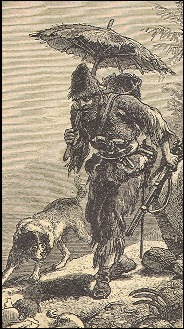
I thought that if savage men had been on the island once (я думал, что если дикие люди были на острове однажды), they were quite likely to come again (они вполне могли прийти опять; likely — вероятно). So I kept on the lookout for them all the time (поэтому я продолжал быть начеку все время/поджидал их все время).
My flock of goats had now grown to be very large (мое стадо коз выросло и стало очень большим), and I needed another field (и мне требовалось другое поле). I wished to put some of them in a hidden spot (я хотел спрятать некоторых из них в потаенное место; to hide — прятать) where the savages, if they did come, would not find them (где дикари, если бы они пришли, не нашли бы их).
I had already a small flock in one such spot (у меня уже было маленькое стадо в одном таком месте), as I have told you (как я вам /уже/ говорил). But now I wished to have another (но теперь я желал, чтобы было еще одно).
In looking for the right kind of place (ища подходящее место), I went all over the island (я обошел весь остров). I even went far out on a rocky point beyond the place where I kept my canoe (я вышел даже на скалистое место за тем местом, где я держал каноэ; point — точка; место, пункт).
As I was standing on a rock and looking out to sea (когда я стоял на скале и смотрел на море), I thought I saw a boat in the distance (я подумал, что увидел лодку на расстоянии = мне показалось, что вдали я увидел лодку). It was only a little speck on the water (это было лишь пятнышко на воде), and it seemed to rise and fall with the waves (и, казалось, оно поднимается и падает с волнами). It could not be a rock (это не могла быть скала).
I looked at it till my eyes could look no more (я глядел на него, пока мои глаза больше не могли смотреть). I had saved a spyglass out of the ship (я сохранил/спас подзорную трубу с корабля); but, as luck would have it (но, как было угодно судьбе; luck — фортуна, судьба; счастливый случай, шанс), I had left it at home (я оставил ее дома; to leave — оставлять). How I wished for it then (как я желал ее тогда)!
Whether I really saw a boat or not (видел ли я в действительности лодку или нет), I do not know (не знаю). But as I walked back along the shore (но пока я шел обратно вдоль берега), I made up my mind never to go out again without my spyglass (я решил никогда больше не выходить без подзорной трубы).
I walked slowly along, thinking of what I had seen (я шел медленно, думая о том, что увидел). All at once I came upon that which made my heart stand still (вдруг я наткнулся на то, что заставило мое сердце остановиться; to stand still — стоять на месте: «стоять неподвижно»).
On the sandy, sloping beach of a pleasant little harbor (на песчаной, спускающейся /к воде/ береговой полосе красивой маленькой заводи; slope — наклон, уклон; скат, склон; откос; to slope — клониться; иметь наклон) I saw not only one footprint, but hundreds of them (я увидел не только один отпечаток ноги, но сотни их; print — оттиск; отпечаток; след).
I stood still, afraid to move (я стоял как вкопанный, боясь пошевелиться).
But the footprints were not all (но отпечатки ноги — это было не все). The beach at one place was covered with bones and bits of flesh (берег был покрыт костями и кусками мяса), as in a slaughter house (как на скотобойне; slaughter — убой, забой /скота/). Some of the bones were quite fresh (некоторые из костей были довольно свежими); some had been charred with fire (некоторые потемнели от огня: «были опаленными огнем»; to char — обжечь, опалить).
"Here the savages have been holding a feast (здесь дикари устраивали: «держали» пир)," I said to myself (сказал я себе).
A little farther on I saw that a pit had been dug in the sand (немного дальше я увидел, что в песке была выкопана яма; to dig — копать), and here they had had their fire (и /что/ здесь у них был костер). The ashes were still warm (зола еще была теплой).
I wondered what kind of a feast these wild men had been having (я задавался вопросом, какой пир эти дикие люди устраивали). There were savages on the mainland who were said to kill and eat the captives (были дикари на материке, которые, как говорили, убивали и ели пленников) whom they took in war (которых они брали на войне). Cannibals they were called (их называли: «они были называемы» каннибалами).
Could this have been a feast of cannibals (могло это быть пиром каннибалов)? And were these the bones and flesh of human beings (были ли это кости и мясо людей: «людских существ»)?
I trembled as I thought of it (я задрожал, когда подумал об этом).
I turned and ran from the place as fast as I could (я развернулся и побежал от этого места так быстро, как /только/ мог).
I ran until I could go no farther (я бежал, пока не мог двигаться больше). My breath came fast (мое дыхание прерывалось: «приходило быстро»). I sank down upon the ground (я опустился/упал на землю; to sink — опускаться, падать).
When I had rested a little while (когда я отдохнул немного; while — промежуток времени), I looked around and found that I was not very far from my castle (я осмотрелся и обнаружил, что я был не очень далеко от моего замка). All around me was peaceful and still (все вокруг меня было мирно и спокойно; still — бесшумный, тихий, безмолвный; неподвижный). I was surely safe from harm (я был определенно спасен от вреда/беды = был в безопасности).
With tears in my eyes (со слезами на глазах) I knelt down and gave thanks to God (я упал на колени и вознес благодарность Богу; to kneel — преклонять колени, становиться на колени). I thanked him that he had kept me alive and safe through so many years (я благодарил Его, /за то/ что Он сохранил меня живым и невредимым на протяжении стольких многих лет). I thanked him that I had been cast on the side of the island which was never visited by savages (я благодарил Его за то, что я был выброшен на /ту/ сторону острова, которую никогда не посещали дикари). I thanked him for all the comforts and blessings that were mine (за все удобства и благословения = счастье, которые были моими = выпали мне на долю; blessing — благословение; блаженство, счастье; to bless — благославлять).
Then I arose and went home to my castle (затем я встал и пошел домой в мой замок; to arise — подниматься, вставать).
As I sat before my door that evening (когда я сидел перед своей дверью в тот вечер), I thought the whole matter over (я обдумал весь вопрос: «всю материю»; to think smth. over — обдумывать что-л.), and felt much easier in my mind (и почувствовал намного легче в душе = почувствовал облегчение; mind — разум; умственные способности; ум; настроение, расположение духа).
I had been on the island eighteen years before I saw the first footprint (я пробыл на острове восемнадцать лет, прежде чем увидел первый отпечаток ноги). I had been there twenty-three years before I saw any other signs of savages (я пробыл там двадцать три года, прежде чем увидел другие признаки дикарей; sign — знак). It was likely that many more years would pass before any harm should come to me (было похоже, что много лет пройдут, прежде чем какая-либо беда постигнет меня).
With these thoughts I lay down in my hammock and slept without fear (с этими мыслями я лег в мой гамак и спал без страха).
But it was a long time before I went again to the farther shore of the island (но прошло долгое время, прежде чем я пошел опять на дальний берег острова). I did not even go to look after my canoe (я даже не пошел взглянуть на мое каноэ = проверить свое каноэ; to look after smb., smth. — следить глазами, взглядом; присматривать, ухаживать за кем-л., чем-л., заботиться о ком-л., чем-л.).
The days went quietly by (дни тихо проходили). I kept quite close to my castle (я держался довольно близко к замку), and busied myself with my goats and my grain (и занимался козами и зерном).
I was always on my guard (я постоянно был начеку; guard — охрана, защита; бдительность, осторожность), and never stepped out of doors without first looking around me (и никогда не выходил из дверей, сначала не осмотревшись).
bold ['bquld], harbor ['hQ:bq], slaughter ['slO:tq], cannibal ['kxnIb(q)l], breath [breT], look [luk]
I AM AGAIN ALARMED
FIVE or six years had passed, and not another footprint had I seen.
I had gotten over my great fright, and yet I was not so bold as I had been. Any sudden sound would make me start and look around. I thought that if savage men had been on the island once, they were quite likely to come again. So I kept on the lookout for them all the time.
My flock of goats had now grown to be very large, and I needed another field. I wished to put some of them in a hidden spot where the savages, if they did come, would not find them.
I had already a small flock in one such spot, as I have told you. But now I wished to have another.
In looking for the right kind of place, I went all over the island. I even went far out on a rocky point beyond the place where I kept my canoe.
As I was standing on a rock and looking out to sea, I thought I saw a boat in the distance. I was only a little speck on the water, and it seemed to rise and fall with the waves. It could not be a rock.
I looked at it till my eyes could look no more. I had saved a spyglass out of the ship; but, as luck would have it, I had left it at home. How I wished for it then!
Whether I really saw a boat or not, I do not know. But as I walked back along the shore, I made up my mind never to go out again without my spyglass.
I walked slowly along, thinking of what I had seen. All at once I came upon that which made my heart stand still.
On the sandy, sloping beach of a pleasant little harbor I saw not only one footprint, but hundreds of them.
I stood still, afraid to move.
But the footprints were not all. The beach at one place was covered with bones and bits of flesh, as in a slaughter house. Some of the bones were quite fresh; some had been charred with fire.
"Here the savages have been holding a feast," I said to myself.
A little farther on I saw that a pit had been dug in the sand, and here they had had their fire. The ashes were still warm.
I wondered what kind of a feast these wild men had been having. There were savages on the mainland who were said to kill and eat the captives whom they took in war. Cannibals, they were called.
Could this have been a feast of cannibals? And were these the bones and flesh of human beings?
I trembled as I thought of it.
I turned and ran from the place as fast as I could.
I ran until I could go no farther. My breath came fast. I sank down upon the ground.
When I had rested a little while, I looked around and found that I was not very far from my castle. All around me was peaceful and still. I was surely safe from harm.
With tears in my eyes I knelt down and gave thanks to God. I thanked him that he had kept me alive and safe through so many years. I thanked him that I had been cast on the side of the island which was never visited by savages. I thanked him for all the comforts and blessings that were mine.
Then I arose and went home to my castle.
As I sat before my door that evening, I thought the whole matter over, and felt much easier in my mind.
I had been on the island eighteen years before I saw the first footprint. I had been there twenty-three years before I saw any other signs of savages. It was likely that many more years would pass before any harm should come to me.
With these thoughts I lay down in my hammock and slept without fear.
But it was a long time before I went again to the farther shore of the island. I did not even go to look after my canoe.
The days went quietly by. I kept quite close to my castle, and busied myself with my goats and my grain.
I was always on my guard, and never stepped out of doors without first looking around me.
I MAKE A SURPRISING DISCOVERY (я совершаю удивительное открытие)
ONCE every week I went into the woods to see the flock of goats that I had hidden there (один раз каждую неделю я ходил в лес посмотреть на стадо коз, которое я спрятал там; to hide — прятать).
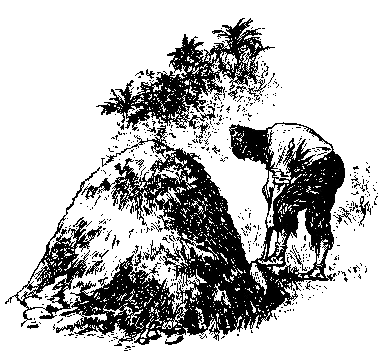
I always carried my gun (я всегда носил = имел при себе ружье), but since my last great fright (но с последнего моего большого страха = с тех пор, как я сильно был напуган) I did not dare to fire it off (я не осмеливался выстрелить из него). I was afraid even to drive a nail (я боялся даже забить гвоздь) or chop a stick of wood (или срубить ветку дерева), lest some savages might be near enough to hear the sound (так как дикари могли быть достаточно близко, чтобы услышать звук; lest — чтобы не, как бы не; что /после глаголов и фраз, обозначающих опасение: вводит дополнение, выражаюшее событие, которого опасаются/).
I was afraid to build a fire at my castle (я боялся развести огонь у моего замка), lest the smoke should be seen (так как дым мог быть увиден).
At last I carried some of my pots and kettles to my hidden field in the woods (в конце концов я принес несколько моих горшков и чайников на мое спрятанное поле в лесу; pot — горшок, котелок, кастрюля). I could do my cooking there much more safely than at my castle (я мог заниматься готовкой там намного в большей безопасности, чем в замке).
Hardly had I put things in order there when I found something that made me very glad (едва я разложил там вещи в порядке, как обнаружил нечто, что сделало меня очень радостным = очень обрадовало меня). What do you suppose it was (что, вы полагаете, это было; to suppose — предполагать)?
It was a cave — a real cave (это была пещера — настоящая пещера). The door into it was through a little hollow place at the bottom of a great rock (дверь в нее была через маленькое отверстие: «полое место» у подножия большой скалы). It was so well hidden that no one could have found it even by looking for it (оно было так хорошо спрятано, что никто не мог бы найти его, даже ища его).
Shall I tell you how I came upon it (должен ли я сказать вам, как как я наткнулся на нее)?
I was afraid to make a smoke near my house (я боялся разводить дым около моего дома), and yet I could not live without cooking meat (но все же не мог жить, не готовя мяса). I tried all kinds of dry wood (я испытал все виды сухой древесины), and yet there was always some smoke (но все же всегда был какой-то дым). Then I thought I would try charcoal (затем я подумал, что стоит попробовать древесный уголь). But I must first make the charcoal (но сначала я должен был сделать древесный уголь).
I found a place in the darkest part of the woods (я нашел место в самой темной части леса) where the smoke would hardly rise to the tops of the trees (где бы дым едва поднялся бы до макушек деревьев). There I built my charcoal pit (там я устроил яму для древесного угля; to build — строить).
This was done in the following way (это было сделано следующим способом):
First, I cleared off a round space about ten feet in diameter (сначала я расчистил круглое пространство около десяти футов в диаметре). Here I dug out the earth (здесь я выкопал землю; to dig out — выкапывать) till I made a pit about a foot deep (пока не сделал яму около фута глубиной). Then I cut a cord or more of wood (затем я нарубил корд9 или больше дров) and piled it up in this space (и уложил его на этом пространстве). I piled it up until it was almost as high as my shoulders (я укладывал их /дрова/, пока они не было почти такими высокими, как мои плечи = на уровне моих плеч; to pile up — нагромождать). I covered it a foot deep with earth and turf (я накрыл их слоем земли и дерна глубиной в фут; deep — глубокий), leaving a small open place at the bottom (оставив маленькое открытое место у основания).
When this was done (когда это было сделано), I set fire to the wood through the hole in the bottom (я поджег древесину через отверстие у основания). It burned slowly (она горела медленно). The wood became charcoal (древесина стала древесным углем; to become — становиться).
One day, while cutting wood for my charcoal pit (однажды, когда я рубил дерево для моей ямы для древесного угля), I happened to see a hollow place in the rock close by a tree I was chopping (мне случилось увидеть углубление в скале близко к дереву, которое я рубил).
It was half covered with brush (оно было наполовину закрыто кустарником). I pushed this aside and looked in (я отодвинул его в сторону и заглянул внутрь). I saw a little cave just large enough for me to creep into on my hands and knees (я увидел маленькую пещеру, достаточно большую только /для того, чтобы/ я пробрался на руках и коленях = на четвереньках; to creep — ползти; пробираться).
But, a little farther in (но немного дальше вглубь), it was larger (она была больше; large — большой, крупный). It was so high that I could stand upright (она была такой высокой = такой высоты, что я мог стоять выпрямившись), and it was so wide that two men could have walked in it side by side (и была такой широкой = такой ширины, что два человека могли идти в ней бок о бок).
It was a very dark place (это было очень темное место), and I stood still a moment (и я мгновение стоял неподвижно) till my eyes should become a little used to it (пока мои глаза немного не привыкли к ней: «пока мои глаза не станут немного привыкшими к ней»).
All at once I saw something in the darkness that made me scramble out of that place much faster than I had come into it (вдруг я увидел что-то в темноте, что заставило меня выкарабкаться из этого места намного быстрее, чем я вошел туда; to scramble — продираться, карабкаться).
What do you think it was (что, вы думаете, это было)? Two big shining eyes (два больших блестящих глаза) that glowed like coals in the darkness (которые пылали, как угли в темноте). Whether they were the eyes of a man or of some fierce beast (были ли это глаза человека или какого-то свирепого животного), I did not stop to see (я не остановился посмотреть = не стал дожидаться ясности).
I stood a little while by the mouth of the cave (я постоял немного у входа в пещеру; mouth — рот; устье, вход; входное отверстие) and then I began to get over my fright (и затем я начал превозмогать свой страх).
What could there be in this cave that would do me harm (что могло быть в этой пещере, что могло причинить мне вред)? No man could live there in the darkness (ни один человек не мог жить там в темноте). As for any animal (что касается любого животного), I knew there was nothing fiercer on the island than one of my cats (я знал, что не было ничего более свирепого на острове, чем одна из моих кошек; fierce — жестокий, лютый, свирепый).
So, with a blazing stick for a torch (поэтому, с ярко горящей палкой вместо = в качестве факела; to blaze — гореть ярким пламенем; сверкать, сиять, блистать; stick — палка; прут; torch — факел), I crept back into the cave (я пробрался обратно в пещеру). But I had not gone three steps before I was frightened almost as much as before (но я не прошел трех шагов, как был напуган почти так же сильно, как раньше).
I heard a loud sigh (я услышал громкий вздох), like that of a man in trouble (как /звук/ человека в беде). Then there were low moans (затем раздались: «были»низкие стоны), and sounds as of some one trying to speak (и звуки, словно от кого-то, пытающегося говорить = словно издаваемые кем-то…).
I stopped short (я остановился как вкопанный; short — короткий; резко, круто). Cold chills ran down my back (холодок: «холодный озноб» пробежал вниз у меня по спине; chill — простуда, озноб). My hair seemed to stand on end (казалось, волосы встали дыбом; on end — стоймя; дыбом). But I would not allow myself to run out again (но я не позволил бы себе выбежать опять).
I pushed my little torch forward into the darkness (я толкнул = протянул мой маленький факел вперед в темноту), as far as I could (так далеко, как я мог). The blaze lit up the cave (пламя осветило пещеру; blaze — яркий огонь, пламя; to light /up/ — зажигать; освещать). And what do you suppose I saw then (и что вы полагаете, я увидел затем)?
Why, nothing but a shaggy old goat (да ничего, как только потрепанную старого козла; goat — козел; коза) that I had missed from my flock for nearly a week past (которого недоставало моему стаду почти неделю уже = который пропал из стада почти неделю назад; to miss smth. — обнаружить отсутствие /чего-л./).
He was stretched on the floor of the cave (он лежал, растянувшись на полу пещеры), and too weak to rise up (и был слишком слаб, чтобы встать). He was a very old fellow (он был очень старым: «старым парнем»), and perhaps had gone in there to die (и, возможно, зашел сюда умирать).
I gave him some food and water (я дал ему еды и воды), and made him as comfortable as I could (и сделал ему так удобно, как мог). But he was too far gone to live long (но он был слишком стар, чтобы прожить долго).
I found that, although I could stand up in the cave, it was very small (я обнаружил, что, хотя я мог стоять в пещере, она была очень маленькой). It was only a hole in the rocks (она была лишь дырой в скалах), and was neither round nor square (и не была ни круглой, ни квадратной).
But at the end of this little chamber there seemed to be a passage that led farther in (но в конце этой маленькой комнаты, казалось, был проход, который вел дальше внутрь; to lead — вести). This passage was very narrow and dark (этот проход был узким и темным; to pass — проходить), and as my torch had burned out (и поскольку мой факел выгорел), I did not try to follow it (я не попытался последовать по нему).
I went back to my wood chopping (я вернулся к моей рубке леса).
discovery [dI'skAv(q)rI], suppose [sq'pquz], upon [q'pOn], charcoal ['tSQ:kqul], brush [brAS], aside [q'saId], sigh ['saI], chamber ['tSeImbq], passage ['pxsIdZ]
I MAKE A SURPRISING DISCOVERY
ONCE every week I went into the woods to see the flock of goats that I had hidden there. I always carried my gun, but since my last great fright I did not dare to fire it off. I was afraid even to drive a nail or chop a stick of wood, lest some savages might be near enough to hear the sound.
I was afraid to build a fire at my castle, lest the smoke should be seen.
At last I carried some of my pots and kettles to my hidden field in the woods. I could do my cooking there much more safely than at my castle.
Hardly had I put things in order there when I found something that made me very glad. What do you suppose it was?
It was a cave — a real cave. The door into it was through a little hollow place at the bottom of a great rock. It was so well hidden that no one could have found it even by looking for it.
Shall I tell you how I came upon it?
I was afraid to make a smoke near my house, and yet I could not live without cooking meat. I tried all kinds of dry wood, and yet there was always some smoke. Then I thought I would try charcoal. But I must first make the charcoal.
I found a place in the darkest part of the woods where the smoke would hardly rise to the tops of the trees. There I built my charcoal pit.
This was done in the following way:
First, I cleared off a round space about ten feet in diameter. Here I dug out the earth till I made a pit about a foot deep. Then I cut a cord or more of wood and piled it up in this space. I piled it up until it was almost as high as my shoulders. I covered it a foot deep with earth and turf, leaving a small open place at the bottom.
When this was done, I set fire to the wood through the hole in the bottom. It burned slowly. The wood became charcoal.
One day, while cutting wood for my charcoal pit, I happened to see a hollow place in the rock close by a tree I was chopping.
It was half covered with brush. I pushed this aside and looked in. I saw a little cave just large enough for me to creep into on my hands and knees.
But, a little farther in, it was larger. It was so high that I could stand upright, and it was so wide that two men could have walked in it side by side.
It was a very dark place, and I stood still a moment till my eyes should become a little used to it.
All at once I saw something in the darkness that made me scramble out of that place much faster than I had come into it.
What do you think it was? Two big shining eyes that glowed like coals in the darkness. Whether they were the eyes of a man or of some fierce beast, I did not stop to see.
I stood a little while by the mouth of the cave and then I began to get over my fright.
What could there be in this cave that would do me harm? No man could live there in the darkness. As for any animal, I knew there was nothing fiercer on the island than one of my cats.
So, with a blazing stick for a torch, I crept back into the cave. But I had not gone three steps before I was frightened almost as much as before.
I heard a loud sigh, like that of a man in trouble. Then there were low moans, and sounds as of some one trying to speak.
I stopped short. Cold chills ran down my back. My hair seemed to stand on end. But I would not allow myself to run out again.
I pushed my little torch forward into the darkness, as far as I could. The blaze lit up the cave. And what do you suppose I saw then?
Why, nothing but a shaggy old goat that I had missed from my flock for nearly a week past.
He was stretched on the floor of the cave, and too weak to rise up. He was a very old fellow, and perhaps had gone in there to die.
I gave him some food and water, and made him as comfortable as I could. But he was too far gone to live long.
I found that, although I could stand up in the cave, it was very small. It was only a hole in the rocks, and was neither round nor square.
But at the end of this little chamber there seemed to be a passage that led farther in. This passage was very narrow and dark, and as my torch had burned out, I did not try to follow it.
I went back to my wood chopping.
I EXPLORE MY CAVE FURTHER (я исследую мою пещеру дальше)
THE next day I brought out with me six big candles (на следующий день в вынес с собой шесть больших свечей).
For you must know that I was a candle maker (так как вы должны знать, что я был создателем свечей = делал свечи) as well as a baker (равно как и пекарем). Indeed, I made very good candles of goats' tallow, using some bits of old ropes for the wicks (в самом деле, я делал очень хорошие свечи из сала коз, использую куски веревки для фитилей).
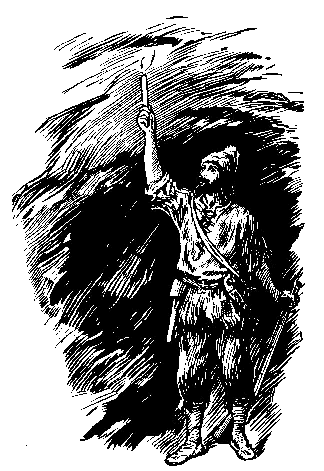
As I have just said, I took six candles with me, for I had made up my mind to learn more about the cave I had found (как я только что сказал, я взял шесть свечей собой, так как я решил узнать больше о пещере, которую я нашел).
I lit two of the candles (я зажег две свечи; to light — зажигать), and went in (зашел внутрь). The poor old goat was dead (бедный старый козел был мертв), and it was no easy work to dig a hole right there and bury him (и было нелегкой работой выкопать яму прямо там и похоронить его; hole — дыра; отверстие; яма).
After this unpleasant task was done (после того как это неприятное задание было сделано), I went into the back part of the cave (я пошел в заднюю часть пещеры). The flame of the candles lighted up the darkness (пламя свечей освещало темноту), and I could see quite plainly (и я мог видеть довольно сносно; plainly — ясно, различимо, отчетливо; plain — плоский, ровный /уст./; очевидный, явный, ясный).
The narrow passage of which I have told you was no less than thirty feet long (узкий проход, о котором я рассказал вам, был не меньше тридцати футов длиной). In one place it was so low that I had to creep through on all fours (в одном месте он был таким низким, что мне пришлось ползти на четвереньках: «на всех четырех»; through — через, сквозь, по).
But no sooner was I through this low place than I found myself in a splendid chamber (но как только я прошел это низкое место, я обнаружил себя в великолепной комнате). It was large enough to shelter a hundred men (она была достаточно большой, чтобы укрыть сто человек).
Indeed, it seemed like the great hall of some old English castle (в самом деле, она казалось /похожей/ на большую залу старого английского замка). I had never seen anything so grand (я никогда не видел ничего столь величественного).
The roof was at least twenty feet high (крыша была, по крайне мере, двадцати футов высотой). The light from my two candles shone upon the walls (свет моих двух свечей освещал стены: «светил на стены»; to shine — светить) and made it look as though covered with thousand of bright stars (и заставлял их выглядеть, как будто они покрыты тысячею ярких звезд).
Whether these were diamonds (были ли это бриллианты), or gold (или золото), or some other precious things (или какие-то другие ценные вещи = ценности), I did not know (я не знал), and in fact I never learned (и на самом деле никогда и не узнал).
The floor was dry and level (пол был сухим и ровным). It was covered with white sand (он был покрыт белым песком), which was very clean (который был очень чистым).
I was delighted (я был рад/в восторге; delight — удовлетворение, удовольствие, наслаждение; to delight — радовать, восхищать /обыкновенно: to be delighted — быть обрадованным/). No better or safer storehouse could I have wished (лучшего или более безопасного склада я не мог и желать).
When I had looked at the room on every side and found that it was really the end of the cave (когда я осмотрел комнаты с каждой стороны и обнаружил, что это действительно был конец пещеры), I went out and hurried back to my castle (я вышел и поспешил обратно в замок).
I found that I still had about sixty pounds of powder (я обнаружил, что у меня все еще есть почти шестьдесят фунтов пороха). This was the first thing that I carried to my new cavern (это было первое, что я отнес в мою новую пещеру). I took thither also the lead (я взял туда также свинец) that I had for making bullets and small shot (который был у меня для изготовления пуль и маленькой = мелкой дроби).
I felt now like one of the wonderful elves that you read about (я чувствовал себя, как один из тех прекрасных эльфов, о которых вы читаете). They live, as you know, in rocks and in caves where none can get at them (они живут, как вы знаете, в скалах и пещерах, где никто не может добраться до них); and they have hidden treasures of gold and precious stones (и у них есть спрятанные сокровища золота и ценных камней).
What if a hundred savages should hunt me (что если сто дикарей погонятся за мной; to hunt — охотиться; травить, гнать)? They could not come near me here (они не смогут приблизиться ко мне здесь). I was safe from all foes (был в безопасности от всех врагов).
I fitted the cave up with whatever was needed to make it comfortable (я оборудовал пещеру всем, что было необходимо, чтобы сделать ее удобной для жизни).
If the worst came to the worst (если бы случилось самое страшное: «если бы худшее пришло к к худшему»; the worst — худшее), I meant to live there (я намеревался жить там). And yet I did not wish to be obliged to do this (но все же я не желал быть вынужденным делать это; to oblige — обязывать; связывать /обязательством, клятвой/; заставлять, принуждать).
When everything was safe and snug (когда все было безопасно и удобно/уютно; snug — удобный; приятный; уютный), I laid some green branches over the entrance and went back to my castle (я уложил несколько зеленых веток над входом = прикрыл вход ветками и пошел обратно в замок; to lay — класть).
I was very glad when I sat down in my old kitchen again (я был очень рад, когда снова сел в моей старой кухне; to sit down — садиться). For, after all, no other place was so much like home (так как, после всего = в конце концов, нет места лучше дома: «никакое другое место не было столь сильно похоже на дом»).
I had now been twenty-three years on this island (я пробыл на острове уже двадцать три года). If it had not been for fear of savages (если бы не страх перед дикарями), I would have been the happiest man in the world (я был бы самым счастливым человеком в мире).
During all those years I had been very busy (в течение всех этих лет я был очень занят). I did not work all the time, as you know (я не работал все время, как вы знаете), but I amused myself in various ways (но развлекал себя разными способами).
I spent much time with Poll, the parrot (я проводил много времени с Попкой-попугаем; to spend — проводить /время/). He soon learned to talk so well that it was a pleasure to hear him (он вскоре научился говорить так хорошо, что было удовольствием слушать его).
My dog had been my best friend and companion (мой пес был моим лучшим другом и спутником/товарищем). He lived for sixteen years (он прожил шестнадцать лет), and then died of old age (и затем умер от старости).
As for my cats, the woods were full of them (что касается моих кошек, леса были полны ими). All ran wild except the two that I kept in my castle (все стали дикими, за исключением двух, которых я держал в замке; to run wild — одичать). These were good mousers and fine pets (они были хорошими ловцами мышей и прекрасными любимцами /домашними животными/; mouse — мышь).
I had also several tame fowls (у меня также было несколько прирученных птиц). These I had caught near the seashore when they were young (этих я поймал у берега, когда они были молодыми; to catch — ловить). I cut their wing feathers short (я обрезал их перья на крыльях коротко) and taught them to eat from my hand (и научил их есть с моей руки; to teach — обучать).
I never knew what kind of birds they were (я так и не узнал, что это были за птицы), but they were large, almost as large as chickens (но они были крупными, почти такими же крупными, как цыплята). They lived among the hedge trees in front of my castle (они жили среди деревьев живой изгороди перед моим замком).
They made their nests there (они вили там гнезда) and kept me well supplied with eggs (и держали меня хорошо обеспеченным яйцами = постоянно обеспечивали меня яйцами; to supply — снабжать /чем-л. — with/, поставлять; доставлять). I did not need to keep any other poultry (мне не было нужды держать какую-либо другую домашнюю птицу).
Thus I lived very pleasantly in my island home (таким образом я жил очень вольготно в моем островном доме). I would have been content to live there always if I could have felt safe from savages (я был бы согласен: «доволен» жить там всегда, если бы я мог чувствовать себя в безопасности от дикарей).
explore [Ik'splO:], candle [kxndl], darkness ['dQ:knIs], splendid ['splendId], diamond ['daIqmqnd], precious ['preSqs], delighted [dI'laItId], treasure ['treZq], entrance ['entrqns], amused [q'mju:zd], companion [kqm'pxnjqn], poultry ['pqultrI], content [kqn'tent]
I EXPLORE MY CAVE FURTHER
THE next day I brought out with me six big candles.
For you must know that I was a candle maker as well as a baker. Indeed, I made very good candles of goats' tallow, using some bits of old ropes for the wicks. As I have just said, I took six candles with me, for I had made up my mind to learn more about the cave I had found.
I lit two of the candles, and went in. The poor old goat was dead, and it was no easy work to dig a hole right there and bury him.
After this unpleasant task was done, I went into the back part of the cave. The flame of the candles lighted up the darkness, and I could see quite plainly.
The narrow passage of which I have told you was no less than thirty feet long. In one place it was so low that I had to creep through on all fours.
But no sooner was I through this low place than I found myself in a splendid chamber. It was large enough to shelter a hundred men.
Indeed, it seemed like the great hall of some old English castle. I had never seen anything so grand.
The roof was at least twenty feet high. The light from my two candles shone upon the walls and made it look as though covered with thousand of bright stars.
Whether these were diamonds, or gold, or some other precious things, I did not know, and in fact I never learned.
The floor was dry and level. It was covered with white sand, which was very clean.
I was delighted. No better or safer storehouse could I have wished.
When I had looked at the room on every side and found that it was really the end of the cave, I went out and hurried back to my castle.
I found that I still had about sixty pounds of powder. This was the first thing that I carried to my new cavern. I took thither also the lead that I had for making bullets and small shot.
I felt now like one of the wonderful elves that you read about. They live, as you know, in rocks and in caves where none can get at them; and they have hidden treasures of gold and precious stones.
What if a hundred savages should hunt me? They could not come near me here. I was safe from all foes.
I fitted the cave up with whatever was needed to make it comfortable.
If the worst came to the worst, I meant to live there. And yet I did not wish to be obliged to do this.
When everything was safe and snug, I laid some green branches over the entrance and went back to my castle.
I was very glad when I sat down in my old kitchen again. For, after all, no other place was so much like home.
I had now been twenty-three years on this island. If it had not been for fear of savages, I would have been the happiest man in the world.
During all those years I had been very busy. I did not work all the time, as you know, but I amused myself in various ways.
I spent much time with Poll, the parrot. He soon learned to talk so well that it was a pleasure to hear him.
My dog had been my best friend and companion. He lived for sixteen years, and then died of old age.
As for my cats, the woods were full of them. All ran wild except the two that I kept in my castle. These were good mousers and fine pets.
I had also several tame fowls. These I had caught near the seashore when they were young. I cut their wing feathers short and taught them to eat from my hand.
I never knew what kind of birds they were, but they were large, almost as large as chickens. They lived among the hedge trees in front of my castle.
They made their nests there and kept me well supplied with eggs. I did not need to keep any other poultry.
Thus I lived very pleasantly in my island home. I would have been content to live there always if I could have felt safe from savages.