



I WORK UNDER MANY DIFFICULTIES (я работаю в трудных условиях: «под многими сложностями»)
MY barley ripened (мой ячмень созрел) and was ready to be harvested (был готов быть собранным). I had neither scythe nor sickle to cut it down (у меня не было ни косы, ни серпа, чтобы срезать его).
But you will remember that I had two old swords which I had found in the ship (но вы вспомните, что я имел две шпаги, которые я нашел на корабле).
With one of the swords I cut off the heads of the barley and dropped them into a big basket I had made (одной шпагой я срезал колосья ячменя и бросал их в большую корзину, /которую/ я сделал). I carried these heads into my cave (я относил колосья в мою пещеру) and thrashed out the grain with my hands (и молотил зерно руками).
When all my harvesting was done (когда весь сбор урожая был закончен: «был сделан»), I measured the grain (я взвесил зерно; to measure — измерять, мерить). I had two bushels of rice (у меня было два бушеля5 риса) and two bushels and a half of barley (и два с половиной бушеля ячменя).
This pleased me very much (это очень меня порадовало). I felt now that I should soon be able to raise grain enough for food (я чувствовал теперь, что скоро смогу вырастить достаточно зерна для еды).
Have you ever thought how many things are necessary for the making of your bread (вы когда-нибудь думали, сколько вещей необходимы для приготовления хлеба)?
You have nothing to do but eat the bread after others have made it (вы не знаете других забот, как /только/ есть хлеб после того, как другие сделали его). But I had to sow (но я должен был сеять), to reap (жать), to thrash (молотить), to grind (молоть), to sift (просеивать), to mix (смешивать), and to bake (и печь).
To do all these I needed many tools (чтобы проделать все это, мне нужно было много инструментов).
I had no plow to turn up the ground (у меня не было плуга, чтобы вскапывать землю; to turn up — поднимать вверх; загибать; вскапывать; вспахивать; to turn — поворачивать, переворачивать). I had no spade nor shovel with which to dig it (у меня не было ни лопаты, ни мотыги, которыми копать ее). But with great labor (с большим трудом) I made me a wooden spade (я смастерил себе деревянную лопату), which was better than nothing (которая была лучше, чем ничего).
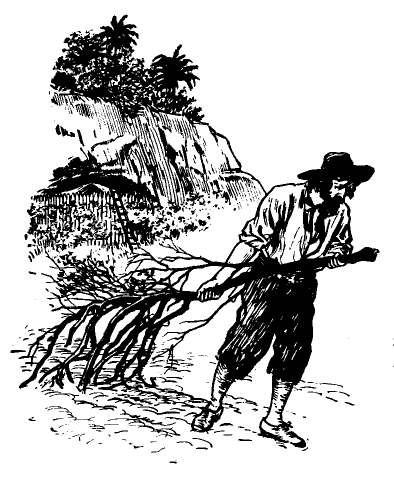
After the ground was turned up (после того, как земля была вскопана), I sowed the seed by scattering it with my hands (я посеял зерно, разбрасывая его руками; to scatter — разбрасывать, раскидывать; рассыпать). But it must be covered so it would grow (но оно должно быть накрыто /землей/, чтобы оно росло), and I had no harrow (а у меня не было бороны). I cut down the branch of a tree (я срезал ветку дерева), and dragged it over the field (и протащил ее по полю; to drag — тянуть, тащить, волочить). This, I think, was the way that people in old times harrowed their ground (это, я думаю, был способ, каким люди в старые времена боронили землю).
The third thing to be done was to build a fence around my field (третье дело, которое нужно было сделать, было построить забор вокруг поля). After that came the reaping (после этого пришла жатва), the curing (заготовка), the carrying home (доставка домой), the thrashing (молотьба), the parting of the grain from the chaff (отделение зерна от мякины), the grinding (помол).
I needed a mill to do the grinding (мне нужна была мельница, чтобы молоть). I needed a sieve to sift the flour (сито, чтобы просеивать муку). I needed yeast and salt to mix with the dough (мне нужны были дрожжи и соль, чтобы смешать /их/ с тестом). I needed an oven to bake it (мне нужна была печь, чтобы испечь его).
I had to do without the most of these things (мне приходилось обходиться без большинства этих вещей). And this made my work very slow and hard (и это делало мою работу очень медленной и тяжелой; hard — жесткий; тяжелый /о работе/).
I was very lucky in having saved so many tools from the wreck (мне повезло, /что я/ сохранил так много инструментов с остова разбитого судна), and for this I was indeed thankful (и за это я в самом деле был благодарен). What a hard case I would have been in if I had saved nothing at all (в каком затруднительном положении: «жестком/тяжелом случае» был бы я, если бы не сохранил/не спас ничего вообще)!
From time to time (время от времени), as I felt the need of things (когда чувствовал необходимость вещей = в какой-либо вещи) I made a number of tools that served me very well (я делал ряд инструментов, которые служили мне очень хорошо). They were not such tools as you would buy at the store (они не были такими инструментами, которые вы бы купили в магазине), but what did it matter (но имело ли это значение)?
I have already told you about the shovel which I made from a piece of hard wood (я уже рассказал вам о лопате, которую я сделал из куска твердого дерева). Next to the shovel I needed a pickax most of all (после лопаты мне больше всего нужна была киркомотыга).
Among the many things that I had saved from the wreck (среди многих вещей, которые я сохранил с разбитого корабля), I found an old crowbar (я нашел старый лом). This I heated in the fire until it was almost white hot (я нагрел его на огне, пока он не стал почти белым от жара; hot — горячий; жаркий; разогретый; накаленный).
I then found that I could bend it quite easily (затем я обнаружил, что мог согнуть его довольно легко). Little by little I shaped it until I had made quite a good pickax of it (мало-помалу я придавал ему /нужную/ форму, пока я не сделал из него довольно хорошую киркомотыгу; shape — форма; to shape — придавать форму, формировать; делать по какому-л. образцу). Of course, it was heavy and not at all pretty (конечно, она была тяжелой и совсем не красивой). But who would look for beauty in a pickax (но кто бы стал искать красоту в киркомотыге)?
I at first felt the need of some light baskets (на первых порах я чувствовал необходимость = мне не хватало легких корзин) in which to carry my fruit and grain (в которых /мог бы/ носить мои плоды и зерно). So I began to study how baskets are made (поэтому я стал теперь изучать, как делаются/сделаны корзины; to study — изучать, исследовать /внимательно, тщательно/; рассматривать, обдумывать, взвешивать).
It was not until I had searched almost every nook on the island (только после того, как я обыскал каждый уголок острова) that I found some long slender twigs (я нашел длинные гибкие прутья) that would bend to make wicker ware (которые бы гнулись, чтобы сделать ивовую лозу = которые можно было гнуть, как ивовую лозу; wicker — ивовый прут, лоза; ware — изделия). Then I spent many an hour learning how to weave these twigs together (затем я провел много часов, учась, как сплетать эти прутья вместе) and shape them into the form of a basket (и придавать им форму корзины).
In the end (в конце концов), however (тем не менее), I was able to make as good baskets as were ever bought in the market (я был способен делать такие хорошие корзины, которые когда-либо покупались на рынке).
I had quite a goodly number of edge tools (у меня было довольно большое количество режущих инструментов; goodly — большой, большого размера; крупный, внушительный). Among these there were three large axes (среди них было три больших топора) and a great store of hatchets (и большой запас топориков); for you will remember that we carried hatchets to trade with the savages (так как вы должны помнить, что мы везли топорики, чтобы торговать/обмениваться с дикарями). I had also many knives (у меня было также много ножей).
But all these became very dull with use (но все они стали тупыми от использования). I had saved a grindstone from the wreck (я спас точильный камень с остова корабля), but I could not turn it and grind my tools at the same time (но не мог крутить его и точить инструменты в одно и то же время).
I studied hard to overcome this difficulty (я напряженно думал, как преодолеть эту трудность). At last (наконец), I managed to fasten a string to the crank of the grindstone in such a way that I could turn it with my foot (мне удалось прикрепить веревку к ручке точильного камня так, что я мог вертеть его ногой).
My tools were soon sharp, and I kept them so (мои инструменты вскоре были острыми, и я держал их такими = поддерживал в таком состоянии).
ripen ['raIp(q)n], scythe ['saID], sword [sO:d], measure ['meZq], bushel [buSl], necessary ['nesqs(q)rI], thrash [TrxS], harrow ['hxrqu], field [fi:ld], flour ['flauq], yeast [ji:st], salt [sO:lt], dough ['dqu], until [qn'tIl], axe [xks], manage ['mxnIG], fasten [fRsn]
I WORK UNDER MANY DIFFICULTIES
MY barley ripened and was ready to be harvested. I had neither scythe nor sickle to cut it down.
But you will remember that I had two old swords which I had found in the ship. With one of the swords I cut off the heads of the barley and dropped them into a big basket I had made. I carried these heads into my cave and thrashed out the grain with my hands.
When all my harvesting was done, I measured the grain. I had two bushels of rice and two bushels and a half of barley.
This pleased me very much. I felt now that I should soon be able to raise grain enough for food.
Have you ever thought how many things are necessary for the making of your bread?
You have nothing to do but eat the bread after others have made it. But I had to sow, to reap, to thrash, to grind, to sift, to mix, and to bake.
To do all these I needed many tools.
I had no plow to turn up the ground. I had no spade nor shovel with which to dig it. But with great labor I made me a wooden spade, which was better than nothing.
After the ground was turned up, I sowed the seed by scattering it with my hands. But it must be covered so it would grow, and I had no harrow. I cut down the branch of a tree, and dragged it over the field. This, I think, was the way that people in old times harrowed their ground.
The third thing to be done was to build a fence around my field. After that came the reaping, the curing, the carrying home, the thrashing, the parting of the grain from the chaff, the grinding.
I needed a mill to do the grinding. I needed a sieve to sift the flour. I needed yeast and salt to mix with the dough. I needed an oven to bake it.
I had to do without the most of these things. And this made my work very slow and hard.
I was very lucky in having saved so many tools from the wreck, and for this I was indeed thankful. What a hard case I would have been in if I had saved nothing at all!
From time to time, as I felt the need of things I made a number of tools that served me very well. They were not such tools as you would buy at the store, but what did it matter?
I have already told you about the shovel which I made from a piece of hard wood. Next to the shovel I needed a pickax most of all.
Among the many things that I had saved from the wreck, I found an old crowbar. This I heated in the fire until it was almost white hot.
I then found that I could bend it quite easily. Little by little I shaped it until I had made quite a good pickax of it. Of course, it was heavy and not at all pretty. But who would look for beauty in a pickax?
I at first felt the need of some light baskets in which to carry my fruit and grain. So I began to study how baskets are made.
It was not until I had searched almost every nook on the island that I found some long slender twigs that would bend to make wicker ware. Then I spent many an hour learning how to weave these twigs together and shape them into the form of a basket.
In the end, however, I was able to make as good baskets as were ever bought in the market.
I had quite a goodly number of edge tools. Among these there were three large axes and a great store of hatchets; for you will remember that we carried hatchets to trade with the savages. I had also many knives.
But all these became very dull with use. I had saved a grindstone from the wreck, but I could not turn it and grind my tools at the same time.
I studied hard to overcome this difficulty. At last, I managed to fasten a string to the crank of the grindstone in such a way that I could turn it with my foot.
My tools were soon sharp, and I kept them so.
I BECOME A POTTER (я становлюсь гончаром)
WHEN it came to making bread (когда предстояло делать хлеб: «когда пришло к деланью = иготовлению хлеба»), I found that I needed several vessels (я обнаружил = понял, что мне нужно несколько сосудов). In fact, I needed them in many ways (на самом деле, они нужны были мне по многим причинам).
It would be hard to make wooden vessels (было бы тяжело делать деревянные сосуды). Of course it was out of the question to make vessels of iron or any other metal (конечно, было вне вопроса = было совершенно невозможно сделать сосуды из железа или любого другого металла). But why might I not make some earthen vessels (но почему не мог я сделать несколько глиняных сосудов)?
If I could find some good clay (если бы я смог найти хорошую глину), I felt quite sure that I could make pots strong enough to be of use (я чувствовал полную уверенность, что я смогу делать горшки достаточно крепкими, чтобы быть годными к использованию/полезными).
After much trouble I found the clay (после многих трудностей я нашел глину). The next thing was to shape it into pots or jars (следующей вещью = задачей придать ей форму горшков или кувшинов).
You would have laughed to see the first things I tried to make (вы бы посмеялись, увидев первые вещи, которые я попытался сделать). How ugly they were (какими уродливыми они были)!
Some of them fell in pieces of their own weight (некоторые их них распадались на кусочки от собственного веса). Some of them fell in pieces when I tried to lift them (некоторые их них распадались на кусочки, когда я пытался поднять их).
They were of all shapes and sizes (они были всех форм и размеров = самых разнообразных форм и размеров).
After I had worked two months I had only two large jars (после того, как я проработал два месяца, у меня было только два больших кувшина) that were fit to look at (на которые можно было смотреть; fit — подходящий, подобающий). These I used for holding my rice and barley meal (их я использовал для хранения рисовой и ячменной еды).
Then I tried some smaller things, and did quite well (хзатем я попытался /сделать/ несколько более мелких вещей, и сделал довольно хорошо).
I made some plates (я сделал несколько тарелок), a pitcher (кувшин), and some little jars that would hold about a pint (и несколько маленьких кувшинов, которые удерживали около пинты6).
All these I baked in the hot sun (их всех я обжег на горячем солнце). They kept their shape (они сохранили свою форму), and seemed quite hard (и казались довольно крепкими). But of course they would not hold water or bear the heat of the fire (но, конечно, они не удержали бы воды и не выдержали бы жара огня).
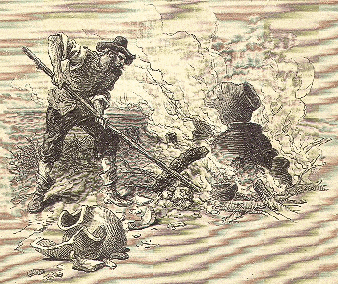
One day when I was cooking my meat for dinner (однажды, когда я готовил мясо на обед), I made a very hot fire (я сделал = развел очень жаркий огонь/костер). When I was done with it (когда я закончил это = приготовление ужина), I raked down the coals (я разгреб угли) and poured water on it to put it out (и налил на костер воды, чтобы загасить его).
It so happened that one of my little earthenware jars had fallen into the fire and been broken (так случилось, что один из моих глиняных кувшинов упал в огонь и разбился). I had not taken it out (я не вытащил его), but had left it in the hot flames (а оставил его в горячем пламени; to leave — оставлять).
Now, as I was raking out the coals (так вот, когда я разгребал угли), I found some pieces of it and was surprised at the sight of them (я нашел несколько кусочков его /кувшина/ и был удивлен их видом), for they were burned as hard as stones and as red as tiles (потому что они спеклись /и стали/ крепкими, как камни, и красными, как черепица).
"If broken pieces will burn so (если разбитые куски обжигаются так)," said I, "why cannot a whole jar be made as hard and as red as these (почему целый кувшин не может быть сделан таким же твердым и красным, как эти)?"
I had never seen potters at work (я никогда не видел гончаров за работой). I did not know how to build a kiln for firing the pots (я не знал, как построить печь для обжига горшков). I had never heard how earthenware is glazed (я никогда не слышал, как глазируется глина).
But I made up my mind to see what could be done (но я решил посмотреть, что может быть сделано; to make up one's mind to do smth. — принять решение, решиться /сделать что-л./).
I put several pots and small jars in a pile (я поставил несколько горшков и кувшинов в кучу), one upon another (один на другой). I laid dry wood all over and about them (я положил сухое дерево над и вокруг), and then set it on fire (м затем поджег это).
As fast as the wood burned up (как только дерево прогорало), I heaped other pieces upon the fire (я бросал новые деревяшки в огонь; heap — груда, куча, масса; to heap — бросать в кучу, складывать в кучу, нагромождать). The hot flames roared all round the jars and pots (пламя шумело = бушевало вокруг кувшинов и горшков; to roar — реветь, орать; рычать). The red coals burned beneath them (красные угли горели под ними).
I kept the fire going all day (я поддерживал огонь весь день). I could see the pots become red-hot through and through (я мог видеть, как горшки становятся раскаленно-красными совершенно; through — насквозь; совершенно). The sand on the side of a little jar began to melt and run (песок в стороне от маленького кувшина начал плавиться и течь).
After that I let the fire go down (после этого я позволил огню потухнуть), little by little (мало-помалу). I watched it all night (я смотрел/следил за ним всю ночь), for I did not wish the pots and jars to cool too quickly (потому что я не хотел, чтобы горшки и кувшины остывали слишком быстро).
In the morning I found that I had three very good earthen pots (утром я обнаружил, что у меня были три очень хороших глиняных горшка). They were not at all pretty (они вовсе не были красивыми), but they were as hard as rocks (но они были тверды как камень; rock — скала) and would hold water (и могли: «будут» удержать воду).
I had two fine jars also (у меня также было два прекрасных кувшина), and one of them was well glazed with the melted sand (и один из них был хорошо глазированный расплавленным песком).
After this I made all the pots and jars and plates and pans that I needed (после этого я сделал все горшки, кувшины, тарелки и миски, которые были нужны). They were of all shapes and sizes (они были всех форм и размеров).
You would have laughed to see them (вы бы посмеялись, увидев их).
Of course I was awkward at this work (конечно, я был неуклюжим/неловким при этой работе). I was like a child making mud pies (я был подобен ребенку, делающий пироги из грязи).
But how glad I was when I found that I had a vessel that would bear the fire (но как рад я был, когда обнаружил, что у меня был сосуд, который вынес бы огонь)! I could hardly wait to put some water in it and boil me some meat (я едва мог ждать, чтобы налить воды в него и сварить себе мясо).
That night I had turtle soup (в тот вечер у меня были черепаховый суп; night — ночь; вечер) and barley broth for supper (ячменная похлебка на ужин).
question ['kwestS(q)n], metal ['met(q)l], ugly ['AglI], bear ['beq], fire ['faIq], earthenware ['q:T(q)nweq], piece [pi:s], burn [bq:n], broth [brOT]
I BECOME A POTTER
WHEN it came to making bread, I found that I needed several vessels. In fact, I needed them in many ways. It would be hard to make wooden vessels. Of course it was out of the question to make vessels of iron or any other metal. But why might I not make some earthen vessels?
If I could find some good clay, I felt quite sure that I could make pots strong enough to be of use.
After much trouble I found the clay. The next thing was to shape it into pots or jars.
You would have laughed to see the first things I tried to make. How ugly they were!
Some of them fell in pieces of their own weight. Some of them fell in pieces when I tried to lift them.
They were of all shapes and sizes.
After I had worked two months I had only two large jars that were fit to look at. These I used for holding my rice and barley meal.
Then I tried some smaller things, and did quite well.
I made some plates, a pitcher, and some little jars that would hold about a pint.
All these I baked in the hot sun. They kept their shape, and seemed quite hard. But of course they would not hold water or bear the heat of the fire.
One day when I was cooking my meat for dinner, I made a very hot fire. When I was done with it, I raked down the coals and poured water on it to put it out.
It so happened that one of my little earthenware jars had fallen into the fire and been broken. I had not taken it out, but had left it in the hot flames.
Now, as I was raking out the coals, I found some pieces of it and was surprised at the sight of them, for they were burned as hard as stones and as red as tiles.
"If broken pieces will burn so," said I, "why cannot a whole jar be made as hard and as red as these?"
I had never seen potters at work. I did not know how to build a kiln for firing the pots. I had never heard how earthenware is glazed.
But I made up my mind to see what could be done.
I put several pots and small jars in a pile, one upon another. I laid dry wood all over and about them, and then set it on fire.
As fast as the wood burned up, I heaped other pieces upon the fire. The hot flames roared all round the jars and pots. The red coals burned beneath them.
I kept the fire going all day. I could see the pots become red-hot through and through. The sand on the side of a little jar began to melt and run.
After that I let the fire go down, little by little. I watched it all night, for I did not wish the pots and jars to cool too quickly.
In the morning I found that I had three very good earthen pots. They were not at all pretty, but they were as hard as rocks and would hold water.
I had two fine jars also, and one of them was well glazed with the melted sand.
After this I made all the pots and jars and plates and pans that I needed. They were of all shapes and sizes.
You would have laughed to see them.
Of course I was awkward at this work. I was like a child making mud pies.
But how glad I was when I found that I had a vessel that would bear the fire! I could hardly wait to put some water in it and boil me some meat.
That night I had turtle soup and barley broth for supper.
I BUILD A BIG CANOE (я мастерю большое каноэ)
WHILE I was doing these things I was always trying to think of some way to escape from the island (пока я делал эти вещи, я постоянно пытался подумать о каком-то пути /как/ сбежать с острова).
True (правда), I was living there with much comfort (я жил там с большим удобствами). I was happier than I had ever been while sailing the seas (я был счастливее, чем был когда-либо, пока плавал по морям = чем когда плавал по морям).
But I longed to see other men (но я очень хотел увидеть других людей). I longed for home and friends (я очень хотел увидеть дом и друзей; to long for smth. — очень хотеть, страстно желать чего-л., стремиться к чему-л.).
You will remember that when I was over at the farther side of the island (вы, наверное, помните, что когда я был на дальней стороне острова) I had seen land in the distance (я видел на расстоянии/в отдалении землю). Fifty or sixty miles of water lay between me and that land (пятьдесят или шестьдесят миль воды лежало между мной и той землей). Yet I was always wishing that I could reach it (но я всегда желал, чтобы я мог достичь ее).
It was a foolish wish (это глупое желание). For there was no telling what I might find on that distant shore (потому что трудно было предположить, что я мог бы найти на том далеком берегу; distant — отдаленный).
Perhaps it was a far worse place than my little island (возможно, это было намного худшее место, чем мой маленький остров). Perhaps there were savage beasts there (возможно, там были дикие звери). Perhaps wild men lived there who would kill me and eat me (возможно, дикие люди жили там, которые могли убить меня и съесть).
I thought of all these things (я думал обо всех этих вещах); but I was willing to risk every kind of danger rather than stay where I was (но я желал скорее рискнуть любой опасностью = пойти на любую опасность, чем оставаться, где я был).
At last I made up my mind to build a boat (наконец я решил построить лодку). It should be large enough to carry me and all that belonged to me (она должна быть достаточно большой, чтобы перевезти меня и все, что принадлежало мне). It should be strong enough to stand a long voyage over stormy seas (она должна быть достаточно крепкой, чтобы выдержать долгое иутешествие по штормящим морям).
I had seen the great canoes which Indians sometimes make of the trunks of trees (я видел большие каноэ, которые индейцы иногда делают из стволов деревьев). I would make one of the same kind (я захотел сделать каноэ того же вида).
In the woods I found a cedar tree (в лесу я нашел кедр) which I thought was just the right thing for my canoe (который, я думал, был как раз подходящим для моего каноэ).
It was a huge tree (это было огромное дерево). Its trunk was more than five feet through at the bottom (его ствол был более пяти футов в диаметре у нижней части; through — через, сквозь).
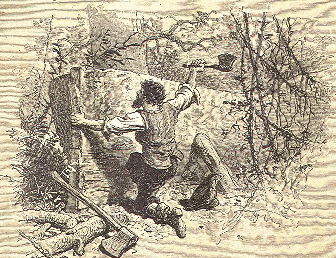
I chopped and hewed many days before it fell to the ground (я рубил и разрубал много дней, прежде чем он упал на землю; to chop — отрезать, отрубать; рубить; крошить; to hew — разрубать, рассекать, рубить). It took two weeks to cut a log of the right length from it (потребовалось две недели, чтобы вырезать из него бревно нужной длины).
Then I went to work on the log (затем я приступил к работе над бревном). I chopped and hewed (я рубил и вырубал) and shaped the outside into the form of a canoe (и придал ему снаружи форму каноэ: «и сформировал его наружную часть в форму каноэ»). With hatchet and chisel I hollowed out the inside (топориком и долотом я выдолбил полость внутри /бревна/; hollow — пустой, полый; to hollow /out/ — выкапывать, выдалбливать).
For full three months I worked on that cedar log (полных три месяца я работал над этой кедровым бревном). I was both proud and glad when the canoe was finished (я был и горд, и рад, когда каноэ было закончено; both — оба; и то, и другое). I had never seen so big a boat made from a single tree (я никогда не видел такой большой лодки, сделанной из одного /целого/ дерева; single — один; единственный; целый; не разделенный /на части/).
It was well shaped and handsome (она была изящной: «хорошо сформированной = хорошей формы» и красивой/стройной). More than twenty men might find room to sit in it (более двадцати человек могли бы найти место, чтобы сесть в ней = могли бы поместиться в ней).
But now the hardest question of all must be answered (но теперь самый сложный из всех вопросов должен быть отвечен).
How was I to get my canoe into the water (как я смогу доставить мое каноэ на воду: «в воду»)?
It lay not more than three hundred feet from the little river (оно лежало не более чем в трехстах футах от речки; to lie — лежать; находиться) where I had first landed with my raft (где я впервые причалил с моим плотом).
But how was I to move it three hundred feet, or even one foot (но как я должен был сдвинуть его на триста футов, или даже на один фут)? It was so heavy that I could not even roll it over (оно было таким тяжелым, что я не мог даже перевернуть: «перекатить» его; to roll — катить).
I thought of several plans (я придумал несколько планов). But when I came to reckon the time and the labor (но когда я подошел к подсчету времени и труда), I found that even by the easiest plan it would take twenty years to get the canoe into the water (я обнаружил, что даже при самом простом плане потребовалось бы двадцать лет, чтобы спустить каноэ на воду).
What could I do but leave it in the woods where it lay (что мог я сделать, кроме как оставить его в лесу, где оно лежало)?
How foolish I had been (каким глупым/неразумным я был)! Why had I not thought of the weight of the canoe before going to the labor of making it (почему я не подумал о весе каноэ, перед тем как начать работу по созданию его)?
The wise man will always look before he leaps (мудрый человек всегда посмотрит, прежде чем прыгнет). I certainly had not acted wisely (я определенно не действовал мудро = сделал глупость).
I went back to my castle (я вернулся в мой замок), feeling sad and thoughtful (чувствуя себе грустным и задумчивым).
Why should I be discontented and unhappy (почему я должен быть неудовлетворенным и несчастным)?
I was the master of all that I saw (я был владельцем всего, что я видел). I might call myself the king of the island (я мог назвать себя королем острова).
I had all the comforts of life (у меня были все удобства жизни).
I had food in plenty (у меня была еда в изобилии).
I might raise shiploads of grain (я мог бы вырастить корабли зерна; shipload — судовой груз), but there was no market for it (но для него не было рынка).
I had thousands of trees for timber and fuel (у меня были тысячи деревьев для древесины топлива), but no one wished to buy (но никто не хотел покупать).
I counted the money which I had brought from the ship (я пересчитал деньги, которые я принес с корабля). There were above a hundred pieces of gold and silver (свыше ста монет золота и серебра); but of what use were they (но какая польза от них)?
I would have given all for a handful of peas or beans to plant (я отдал бы все за горсть гороха и бобов /которые можно было бы/ посеять). I would have given all for a bottle of ink (я отдал бы все за бутылку чернил).
escape [Is'keIp], reach [ri:tS], distant ['dIst(q)nt], danger ['deInGq], enough [I'nAf], canoe [kq'nH], chisel ['tSIz(q)l], discontented ["dIskqn'tentId], market ['mQ:kIt], fuel ['fju:ql]
I BUILD A BIG CANOE
WHILE I was doing these things I was always trying to think of some way to escape from the island. True, I was living there with much comfort. I was happier than I had ever been while sailing the seas.
But I longed to see other men. I longed for home and friends.
You will remember that when I was over at the farther side of the island I had seen land in the distance. Fifty or sixty miles of water lay between me and that land. Yet I was always wishing that I could reach it.
It was a foolish wish. For there was no telling what I might find on that distant shore.
Perhaps it was a far worse place than my little island. Perhaps there were savage beasts there. Perhaps wild men lived there who would kill me and eat me.
I thought of all these things; but I was willing to risk every kind of danger rather than stay where I was.
At last I made up my mind to build a boat. It should be large enough to carry me and all that belonged to me. It should be strong enough to stand a long voyage over stormy seas.
I had seen the great canoes which Indians sometimes make of the trunks of trees. I would make one of the same kind.
In the woods I found a cedar tree which I thought was just the right thing for my canoe.
It was a huge tree. Its trunk was more than five feet through at the bottom.
I chopped and hewed many days before it fell to the ground. It took two weeks to cut a log of the right length from it.
Then I went to work on the log. I chop and hewed and shaped the outside into the form of a canoe. With hatchet and chisel I hollowed out the inside.
For full three months I worked on that cedar log. I was both proud and glad when the canoe was finished. I had never seen so big a boat made from a single tree.
It was well shaped and handsome. More than twenty men might find room to sit in it.
But now the hardest question of all must answered.
How was I to get my canoe into the water?
It lay not more than three hundred feet from the little river where I had first landed with my raft.
But how was I to move it three hundred feet, or even one foot? It was so heavy that I could not even roll it over.
I thought of several plans. But when I came to reckon the time and the labor, I found that even by the easiest plan it would take twenty years to get the canoe into the water.
What could I do but leave it in the woods where it lay?
How foolish I had been! Why had I not thought of the weight of the canoe before going to the labor of making it?
The wise man will always look before he leaps. I certainly had not acted wisely.
I went back to my castle, feeling sad and thoughtful.
Why should I be discontented and unhappy?
I was the master of all that I saw. I might call myself the king of the island.
I had all the comforts of life.
I had food in plenty.
I might raise shiploads of grain, but there was no market for it.
I had thousands of trees for timber and fuel, but no one wished to buy.
I counted the money which I had brought from the ship. There were above a hundred pieces of gold and silver; but of what use were they?
I would have given all for a handful of peas or beans to plant. I would have given all for a bottle of ink.
I MAKE AN UMBRELLA (я делаю зонтик)
AS the years went by (пока проходили годы) the things which I had brought from the ship were used up or worn out (вещи, которые я принес с корабля, использовались /до конца/ и износились; to wear — носить /обувь, одежду/; to wear out — изнашивать).
My biscuits lasted more than a year (моего печенья хватило более чем на год); for I ate only one cake each day (так как я ел только одно печенье каждый день; cake — кекс; пирожное; торт).
My ink soon gave out (чернила вскоре иссякли; to give out — иссякать, кончаться /о запасах, силах и т. п./), and then I had no more use for pens or paper (и затем = в дальнейшем я не мог больше использовать перья и бумагу).
At last my clothes were all worn out (наконец, одежда моя была вся изношена).
The weather was always warm on my island (погода была всегда/постоянно теплой на моем острове) and there was little need for clothes (и была малая необходимость в одежде). But I could not go without them (но я не мог обходиться без нее; to go without smth. — обходиться без /чего-л./, мириться с отсутствием /чего-л./).
It so happened that I had saved the skins of all the animals I had killed (так случилось, что я сохранял шкуры всех животных, /которых/ я убил).
I stretched every skin on a framework of sticks (я растягивал каждую шкуру на каркасе из палок) and hung it up in the sun to dry (и вешал на солнце сушиться).
In time I had a great many of these skins (со временем у меня было = скопилось очень много этих шкур). Some were coarse (некоторые были грубыми) and stiff (и жесткими; stiff — тугой, негибкий, неэластичный, жесткий) and fit for nothing (и не подходили ни для чего; fit — подходящий, годный, пригодный). Others were soft to the touch and very pretty to look at (другие были мягкие на ощупь и приятные глазу: «и очень симпатичные, чтобы смотреть на них»).
One day I took one of the finest and made me a cap of it (однажды я взял одну из лучших и сделал себе шапочку из нее). I left all the hair on the outside (я оставил всю шерсть: «волосы» снаружи: «на наружней стороне»), so as to shoot off the rain (так, чтобы сбрасывать дождь = защищаться от дождя).
It was not very pretty (она была не очень красивой); but it was of great use (но была очень полезна: «была большой пользы»), and what more did I want (а чего же больше мне было желать)?
I did so well with the cap that I thought I would try something else (у меня получилось так хорошо с шапочкой, что я подумал, что я бы попытался что-нибудь еще /сделать/). So, after a great deal of trouble (после многих мучений/трудностей), I made me a whole suit (я сделал себе целый костюм).
I made me a waistcoat (я сделал жилет) and a pair of knee breeches (и пару бриджей; knee — колено; breeches — штаны, брюки). I wanted them to keep me cool rather than warm (я хотел, чтобы они «держали» меня скорее в прохладе, чем в тепле). So I made them quite loose (поэтому я сделал их довольно свободными; loose — свободный; непривязанный, неприкрепленный; просторный, широкий /об одежде/).
You would have laughed to see them (вы бы посмеялись, увидев их). They were funny things, I tell you (это были забавные вещи, скажу я вам). But when I went out in the rain (но когда я выходил наружу под дождь), they kept me dry (они не давали мне промокнуть: «сохраняли меня сухим»).
This, I think, put me in mind of an umbrella (это, я думаю, подсказало мне идею сделать зонт).
I had seen umbrellas in Brazil (я видел зонты в Бразилии), although they were not yet common in England (хотя они еще не были еще распространены в Англии; common — общий, всеобщий; общепринятый, распространенный). They were of much use in the summer when the sun shone hot (они были очень полезны летом, когда солнце светило жарко; to shine — светить).
I thought that if they were good in Brazil (я подумал, что если они были хороши в Бразилии), they would be still better here (они будут еще лучше здесь), where the sun was much hotter (где солнце было намного жарче).
So I set about the making of one (поэтому я приступил к тому, чтобы делать зонт).
I took great pains with it (это потребовало больших усилий от меня; pain — боль; мука), and it was a long time before it pleased me at all (и прошло долгое время, прежде чем он понравился мне вообще).
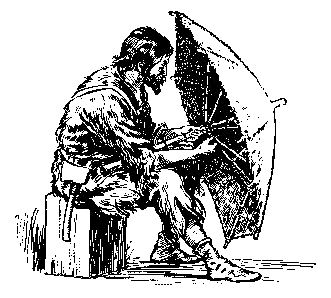
I could make it spread (я мог развернуть его: «заставить его развернуться»; to spread — развертывать/ся/), but it did not let down (но он не складывался: «не опускался»). And what would be the use of an umbrella that could not be folded (и какая была бы польза от зонта, который нельзя было бы сложить: «который не мог быть сложенным»)?
I do not know how many weeks I spent at this work (не знаю, сколько недель я провел за этой работой). It was play work rather than anything else (это была скорее игровая работа = легкая работа/развлечение, чем что-то другое), and I picked it up only at odd times (и я подхватывал ее только в свободное время; odd — нечетный; случайный, нерегулярный).
At last I had an umbrella that opened and shut (в конце концов у меня был зонт, который открывался и закрывался) just as an umbrella should (именно так, как зонт должен = как полагается зонту).
I covered it with skins (я покрыл его шкурами), with the hair on the outside (шерстью наружу). In the rain it was as good as a shed (в дождь он был столь же хорош, как навес). In the sun it made a pleasant shade (на солнце он давал приятную тень).
I could now go out in all kinds of weather (я мог теперь выходить в любую погоду). I need not care whether the rain fell or the sun shone (мне не приходилось беспокоиться, шел: «падал» ли дождь или светило солнце).
For the next five years I lived very quietly (следующие пять лет я жил очень спокойно). I kept always busy (я всегда находил занятие) and did not allow myself to feel lonely (и не позволял себе чувствовать себя одиноким).
I divided each day into parts according to my several duties (я делил каждый день на части в соответствии с рядом моих обязанностей; several — некоторые, несколько).
After reading in my Bible (после чтения Библии), it was my custom to spend about three hours every morning in search of food (моей привычкой было проводить примерно три часа каждое утро в поисках еды). Through the heat of the day (во время дневной жары), I busied myself in the shade of my castle or bower (я занимался = работал в тени замка или беседки).
In the evening, when the sun was low (вечером, когда солнце было низким), I worked in my fields (я работал на полях). But sometimes I went to work very early in the morning (но иногда я шел работать очень рано утром) and left my hunting until the afternoon (и оставлял охоту до послеобеденного времени).
umbrella [Am'brelq], hair ['heq], pretty ['prItI], whole ['hqul], suit [sju:t], rather ['rQ:Dq], common ['kOmqn], busy ['bIzI], divide [dI'vaId], duty ['dju:tI], custom ['kAstqm]
I MAKE AN UMBRELLA
AS the years went by the things which I had brought from the ship were used up or worn out. My biscuits lasted more than a year; for I ate only one cake each day.
My ink soon gave out, and then I had no more use for pens or paper.
At last my clothes were all worn out.
The weather was always warm on my island and there was little need for clothes. But I could not go without them.
It so happened that I had saved the skins of all the animals I had killed.
I stretched every skin on a framework of sticks, and hung it up in the sun to dry.
In time I had a great many of these skins. Some were coarse and stiff and fit for nothing. Others were soft to the touch and very pretty to look at.
One day I took one of the finest and made me a cap of it. I left all the hair on the outside, so as to shoot off the rain.
It was not very pretty; but it was of great use, and what more did I want?
I did so well with the cap that I thought I would try something else. So, after a great deal of trouble, I made me a whole suit.
I made me a waistcoat and a pair of knee breeches. I wanted them to keep me cool rather than warm. So I made them quite loose.
You would have laughed to see them. They were funny things, I tell you. But when I went out in the rain, they kept me dry.
This, I think, put me in mind of an umbrella.
I had seen umbrellas in Brazil, although they were not yet common in England. They were of much use in the summer when the sun shone hot.
I thought that if they were good in Brazil, they would be still better here, where the sun was much hotter.
So I set about the making of one.
I took great pains with it, and it was a long time before it pleased me at all.
I could make it spread, but it did not let down. And what would be the use of an umbrella that could not be folded?
I do not know how many weeks I spent at this work. It was play work rather than anything else, and I picked it up only at odd times.
At last I had an umbrella that opened and shut just as an umbrella should.
I covered it with skins, with the hair on the outside. In the rain it was as good as a shed. In the sun it made a pleasant shade.
I could now go out in all kinds of weather. I need not care whether the rain fell or the sun shone.
For the next five years I lived very quietly. I kept always busy and did not allow myself to feel lonely.
I divided each day into parts according to my several duties.
After reading in my Bible, it was my custom to spend about three hours every morning in search of food. Through the heat of the day, I busied myself in the shade of my castle or bower.
In the evening, when the sun was low, I worked in my fields. But sometimes I went to work very early in the morning and left my hunting until the afternoon.