



I AM CAST UPON A STRANGE SHORE (я выброшен на незнакомый берег)
THE next thing I knew (следующая вещь, которую я узнал = следующее, что я понял) I was lying on the beach (/это то, что/ я лежал на пляже) and the breakers were rolling over me (а огромные волны перекатывались через меня).
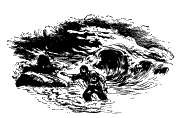
Some wave, kinder than others (какая-то волна, более мягкая/тихая, чем другие; kind — добрый, любезный, сердечный; податливый; покладистый, послушный), must have carried me there (должно быть, отнесла меня туда).
I got upon my feet (я встал на ноги) and ran as fast as I could (и побежал так быстро, как мог).
I saw another wave coming after me (я увидел другую волну, идущую за мной = догоняющую меня). It was high as a hill (она была высокой, как холм).
I held my breath and waited (я задержал дыхание и ждал; to hold — держать). In a moment the wave was upon me (через мгновение волна была на мне). I could feel myself carried farther and farther (я мог чувствовать себя утащенным дальше и дальше = как меня тащило…) toward the dry land (по направлению к сухой земле).
The water covered me (вода накрыла меня). But I held my breath and tried to swim (я задержал дыхание и постарался плыть).
The wave became smaller and weaker (волна становилась /все/ меньше и слабее; to become — становиться) as it rolled farther and farther up the long beach (по мере того, как она катилась дальше вверх на длинную береговую полосу).
At last I could keep my head and shoulders above water (наконец я смог держать голову и плечи над водой). I could breathe again (я снова мог дышать).
I felt the ground under my feet (я почувствовал землю под ногами). I struck out with all my might for the dry land (я устремился со всей своей силой = изо всех сил к суше; to strike — ударять; to strike out — направляться, устремляться).
But now the water was rushing back from the shore (но теперь вода неслась/хлынула обратно от берега; to rush — бросаться, мчаться, нестись, устремляться). I feared lest I should be carried out to sea again (я боялся, как бы нt быть утащенным снова в море; lest — чтобы не, как бы не).
I swam (плыл; to swim), I ran (бежал; to run). I held on to the rocks (держался = цеплялся за камни; to hold). Then another great wave came and lifted me high upon the shore (затем другая огромная волна подняла = отнесла меня высоко на берег).
In another moment I was safe on dry land (в следующее: «в другое» мгновение я был в безопасности на суше).
I was worn out with the hard struggle (я был утомлен тяжелой борьбой; to wear — носить /об одежде, обуви/; to wear out — изнашивать; изнурять), I lay down upon the green grass (я лег на зеленую траву; to lie — лежать; to lie down — ложиться; прилечь). I looked up at the sky (я взглянул вверх на небо) and thanked God that I was alive and safe (и поблагодарил Бога за то, что был живым и в невредимым).
After I had rested a little while (после /того как/ я отдохнул немного) I arose and looked around me (я встал и огляделся вокруг; to arise — подниматься, вставать).
Far out from the shore I could see the ship (далеко от берега я мог видеть корабль). It was still lying where it had stuck in the sand (он все еще лежал там, где он застрял в песке; to stick — втыкать; застрять). The waves were dashing over it (волны захлестывали его: «перехлестывали через него»).
"How was it possible for me to swim so far (как было возможно мне проплыть так далеко)?" I asked myself (спросил я себя).
Then I began to think of the men that were with me (затем я стал думать о людях, которые были со мной). Had any of them been saved (был ли кто-нибудь из них спасен)?
I walked along the shore for a mile or more (я прошелся вдоль берега милю или больше). I looked in every spot for some signs of my friends (я заглядывал в каждый угол за какими-либо знаками = признаками/следами моих друзей; spot — пятнышко; место, участок местности).
In one place I found a hat (в одном месте я нашел шляпу; to find — находить); in another, a cap (в другом — шапку); And in still another, two shoes that were not mates (а еще в другом — два башмака, которые не были парой).
But of the men themselves I saw nothing (но от самих людей не видел ничего = но из самих людей я никого не видел). All were drowned in the deep sea (все утонули в глубоком море; to be drowned — утонуть: «быть утонувшим»).
fast [fQ:st], after ['Q:ftq], moment ['mqumqnt], farther ['fRDq], cover ['kAvq], breath [breT], became [bI'keIm], shoulder ['Squldq], above [q'bAv], breathe [brJD], ground ['graund], shore [SL], arose [q'rquz], possible ['pOsqbl], ask [Q:sk], sign ['saIn], friend ['frend], shoe [Su:], drown ['draun]
I AM CAST UPON A STRANGE SHORE
THE next thing I knew I was lying on the beach and the breakers were rolling over me. Some wave, kinder than others, must have carried me there. I got upon my feet and ran as fast as I could. I saw another wave coming after me. It was high as a hill.
I held my breath and waited. In a moment the wave was upon me. I could feel myself carried farther and farther toward the dry land.
The water covered me. But I held my breath and tried to swim.
The wave became smaller and weaker as it rolled farther and farther up the long beach.
At last I could keep my head and shoulders above water. I could breathe again.
I felt the ground under my feet. I struck out with all my might for the dry land.
But now the water was rushing back from the shore. I feared lest I should be carried out to sea again.
I swam, I ran. I held on to the rocks. Then another great wave came and lifted me high upon the shore.
In another moment I was safe on dry land.
I was worn out with the hard struggle, I lay down upon the green grass. I looked up at the sky and thanked God that I was alive and safe.
After I had rested a little while I arose and looked around me.
Far out from the shore I could see the ship. It was still lying where it had stuck in the sand. The waves were dashing over it.
"How was it possible for me to swim so far?" I asked myself.
Then I began to think of the men that were with me. Had any of them been saved?
I walked along the shore for a mile or more. I looked in every spot for some signs of my friends.
In one place I found a hat; in another, a cap; And in still another, two shoes that were not mates.
But of the men themselves I saw nothing. All were drowned in the deep sea.
I FIND A STRANGE LODGING PLACE (я нахожу странное место обитания)
IT was now late in the afternoon (был уже поздний день; afternoon — время после полудня; послеобеденное время; in the afternoon — после полудня, днем; noon — полдень). The sun was shining in the bright sky (солнце светило в ярком небе; to shine — светить). The storm was at an end (шторм закончился).
I began to look around me (я начал смотреть вокруг = осматриваться), to see what kind of place I was in (чтобы увидеть, в какого рода месте я был). "Where shall I go (куда мне пойти)?" I asked myself (спросил я себя). "What shall I do (что мне делать)?"
My clothes were still wet (моя одежда была все еще мокрой). I could dry them only by sitting in the sun (я мог высушить ее, только сидя на солнце).
I had nothing to eat or drink (у меня не было ничего есть или пить).
I had nothing about me but a knife, a pipe, and a little tobacco (при собе у меня не было ничего, кроме ножа, трубки и немного табака).
How could I live on this strange shore without shelter and without food (как мог я жить на этом чужом берегу без укрытия/крова и еды; shelter — приют, кров; пристанище, прибежище)?
The thought of this made me almost wild (мысль об этом привела меня в ужас: «сделала меня почти диким»). I ran this way and that, like a madman (я бегал туда и сюда: «в этом направении и в том», как сумасшедший).
Then I sat down and cried like a child (затем я сел и заплакал, как ребенок).
I never felt so lonely (никогда я не чувствовал себя таким одиноким; to feel — чувствовать) as at that moment (как в это мгновение). I never felt so helpless and lost (никогда я не чувствовал себя таким беспомощным и потерянным).
Soon I saw that night was coming on (вскоре я увидел, что наступала/приближась ночь).
I thought: "What if there are wild beasts in the woods (я подумал: что если в лесу есть дикие чудовища)? They will come out in the darkness (они выйдут в темноте) and find me here (и найдут меня здесь). And then how can I save myself from them (и тогда как я смогу спастись от них)?"
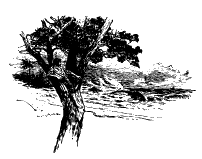
A little way from the shore I saw a tree (недалеко от берега я увидел дерево). It stood all alone (оно стояло совсем одно), with no other trees near it (без каких-либо других деревьев около него).
It was thick and bushy (оно было толстое и ветвистое: «густое»; bush — куст), with long thorns on its branches (с длинными колючками на ветках).
I walked out to look at it (я пошел /туда/ посмотреть на него).
To my great joy (к моей большой радости) I found a spring of fresh water (я обнаружил источник пресной воды) bubbling out from among its roots (булькающий наружу между ее корней; to bubble — булькать).
I knelt down (встал на колени; to kneel — преклонять колени, становиться на колени /также to kneel down/) and took a long drink (и взял = сделал длинный глоток), for I was very thirsty (так как очень хотел пить; to be thirsty — хотеть пить: «быть жаждущим»; thirst — жажда). Then I climbed up into the tree (затем взобрался наверх в дерево = забрался на дерево; to climb — взбираться, влезать, восходить, карабкаться, подниматься).
The branches grew very close together (ветки росли очень близко вместе = очень тесно). I found a place where I could rest (я нашел место, где я мог отдохнуть), half sitting and half lying (полусидя-полулежа), with no danger of falling (без опасности падения = не опасаясь упасть).
With my pocket knife (своим карманным ножом) I cut a strong stick about two feet long (я отрезал прочную палку примерно два фута1 длиной). This would be my weapon (это будет моим оружием) if any beast should find me in the night (если какое-либо чудовище найдет меня в ночи).
It was now quite dark (было уже: «теперь» довольно темно; quite — вполне, совершенно; довольно; почти, до некоторой степени). The only sound that I could hear (единственным звуком, который я мог слышать) was that of the waves breaking against the shore (был звук волн, разбивающихся о берег).
It seemed so good to be on dry land (казалось так хорошо быть на суше) that I forgot every danger (что забыл любую опасность). I was so tired (я был таким уставшим) that I soon fell asleep (что скоро заснул; to fаll asleep — заснуть: «упасть спящим»). Never have I slept more soundly (никогда я не спал более крепко; sound — здоровый, крепкий; /перен., о сне/ крепкий, глубокий).
around [q'raund], without [wI'Dqut], thought [TO:t], almost ['Llmqust], wild ['waIld], child ['tSaIld], [bi:st], stood [stu:d], alone [q'lqun], branch [brRntS], walk [wO:k], among [q'mAN], knelt [nelt], thirsty ['Tq:stI], climb ['klaIm], danger ['deInGq], weapon ['wepqn], quite ['kwaIt], sound ['saund]
I FIND A STRANGE LODGING PLACE
IT was now late in the afternoon. The sun was shining in the bright sky. The storm was at an end. I began to look around me, to see what kind of place I was in. "Where shall I go?" I asked myself. "What shall I do?"
My clothes were still wet. I could dry them only by sitting in the sun.
I had nothing to eat or drink.
I had nothing about me but a knife, a pipe, and a little tobacco.
How could I live on this strange shore without shelter and without food?
The thought of this made me almost wild. I ran this way and that, like a madman.
Then I sat down and cried like a child.
I never felt so lonely as at that moment. I never felt so helpless and lost.
Soon I saw that night was coming on.
I thought: "What if there are wild beasts in the woods? They will come out in the darkness and find me here. And then how can I save myself from them?"
A little way from the shore I saw a tree. It stood all alone, with no other trees near it.
It was thick and bushy, with long thorns on its branches.
I walked out to look at it.
To my great joy I found a spring of fresh water bubbling out from among its roots.
I knelt down and took a long drink, for I was very thirsty. Then I climbed up into the tree.
The branches grew very close together. I found a place where I could rest, half sitting and half lying, with no danger of falling.
With my pocket knife I cut a strong stick about two feet long. This would be my weapon if any beast should find me in the night.
It was now quite dark. The only sound that I could hear was that of the waves breaking against the shore.
It seemed so good to be on dry land that I forgot every danger. I was so tired that I soon fell asleep. Never have I slept more soundly.
I VISIT THE WRECK (я посещаю разбитое судно)
WHEN I awoke (когда я проснулся; to awake — просыпаться) it was broad daylight (было совсем светло; broad — широкий; daylight — дневной свет; дневное время суток). The sun was up (солнце светило: «было наверху»). The sky was clear (небо было ясным). The air seemed soft and mild (воздух казался мягким и тихим; mild — безветренный, тихий, спокойный, ясный). A fine day was beginning (начинался прекрасный день).
It did not take me long (это не заняло у меня много времени) to come down from my lodging place (спуститься с моего места расположения; to lodge — располагаться).
I looked out toward the sea (я взглянул на море; toward — по направлению).
To my great wonder (к моему большому удивлению), I saw that the ship was now much closer to the shore (я увидел, что корабль был теперь намного ближе к берегу). The high tide had lifted her off the sand (высокий прилив приподнял его с песка). It had carried her toward the land (он отнес его к земле) and left her on a huge rock (и оставил на огромном рифе; rock — скала, утес; подводный камень, риф) less than a mile away (меньше чем в миле /о берега/).
I could see that the good ship stood upright (я мог видеть, что /мой/ добрый корабль стоял прямо/вертикально) and was firmly wedged into the rock (и был крепко насажен на риф; wedge — клин; to wedge — втискивать, загонять).
The waves had not broken her up (волны не сломали его), but her masts had been snapped off (но его мачты были отломаны; to snap off — отломать /резко/; to snap — щелкать, лязгать, хлопать; порвать, сломать), and all her rigging was gone (и все снасти исчезли).
The sea was quite smooth (море было довольно ровным; smooth — гладкий), and the tide was still going out (и все еще был отлив: «поток все еще выходил»). Soon the beach was bare (вскоре берег стал открыт: «обнажен»), and I could walk a long way out (и я смог пройти далеко /к морю/).
I was now within a quarter of a mile of the ship (я был теперь на расстоянии четверти мили от корабля; within — в, внутри; в пределах).
As I looked at her, a sad thought came to my mind (когда я посмотрел на нее, грустная мысль пришла мне на ум). For if we had all kept on board when she stuck in the sand (так как если бы мы остались на борту, когда он застрял в песке), we would now have been safe (мы бы сейчас были невредимы).
But there was no use (не было пользы = толку) in thinking of what might have been (обдумывать то, что могло бы быть).
I waded out (я пошел вброд; to wade — переходить вброд) as far as I could (настолько далеко, насколько смог), and then swam for the ship (а затем поплыл к кораблю; to swim — плыть).
As I came near her (когда я приблизился к нему), I saw that she was lying high out of the water (я увидел, что он лежал высоко из воды = возвышался над водой). The part of the rock that was uncovered (та часть рифа, которая была открыта: to cover — покрывать; to uncover —открывать) rose steep and straight into the air (поднималась круто и прямо в воздух). There was no place for me to set my feet (не было места, /куда/ поставить ноги).
I swam round the ship twice (я проплыл вокруг корабля дважды). How could I ever climb up her smooth sides (как я смогу когда-нибудь = как же мне взобраться по гладким сторонам/бокам)?
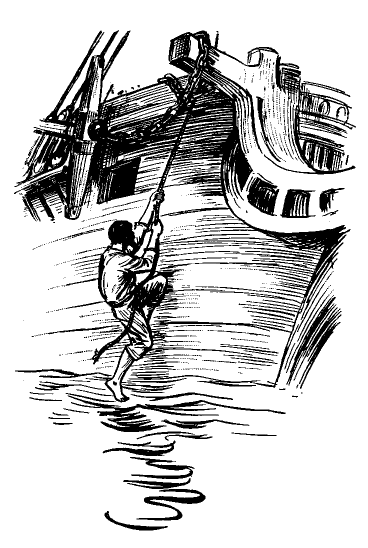
I was about to give up (я готов был сдаться), when I saw a small piece of rope (когда увидел небольшой кусок веревки) hanging down from the deck (свисающей с палубы). It reached almost to the water (он почти достигал = доставал до воды). How strange that I did not see it at first (как странно, что я не увидел его сначала)!
I seized hold of the rope (я ухватился: «схватил ухват» за веревку; to seize — хватать, схватывать; hold — схватывание, захват; сжатие; удержание), and climbed hand over hand to the deck (и проворно взобрался на палубу; hand over hand — быстро, проворно: «руку поверх руки»).
I went into the ship's cabin (я вошел в корабельную каюту). I looked all through the unlucky vessel (я осмотрел все несчастное судно; through — через; насквозь; от начала до конца).
awoke [q'wquk], clear ['klIq], air ['eq], mild ['maIld], toward [tq'wO:d], huge [hjHG], upright ['Ap'raIt], bare ['beq], quarter ['kwO:tq], use /сущ./ ['ju:s], climb ['klaIm], strange ['streInG], seize [si:z], hold ['hquld]
I VISIT THE WRECK
WHEN I awoke it was broad daylight. The sun was up. The sky was clear. The air seemed soft and mild. A fine day was beginning. It did not take me long to come down from my lodging place.
I looked out toward the sea.
To my great wonder, I saw that the ship was now much closer to the shore. The high tide had lifted her off the sand. It had carried her toward the land and left her on a huge rock less than a mile away.
I could see that the good ship stood upright and was firmly wedged into the rock.
The waves had not broken her up, but her masts had been snapped off, and all her rigging was gone.
The sea was quite smooth, and the tide was still going out. Soon the beach was bare, and I could walk a long way out.
I was now within a quarter of a mile of the ship.
As I looked at her, a sad thought came to my mind. For if we had all kept on board when she stuck in the sand, we would now have been safe.
But there was no use in thinking of what might have been.
I waded out as far as I could, and then swam for the ship.
As I came near her, I saw that she was lying high out of the water. The part of the rock that was uncovered rose steep and straight into the air. There was no place for me to set my feet.
I swam round the ship twice. How could I ever climb up her smooth sides?
I was about to give up, when I saw a small piece of rope hanging down from the deck. It reached almost to the water. How strange that I did not see it at first!
I seized hold of the rope, and climbed hand over hand to the deck.
I went into the ship's cabin. I looked all through the unlucky vessel.
I MAKE ME A RAFT (я делаю себе плот)
THERE was a great deal of water in the ship’s hold (было много воды внутри корабля; deal — некоторое количество; great deal of — много; hold — то, что вмещает и удерживает; гнездо, паз; крепежная деталь; вместилище, хранилище; to hold — держать). But the cabin and the storerooms were dry (но каюта и кладовые были сухими; store — запас, резерв; to store — хранить, сохранять).
The boxes of food had not been touched by the water (короба с едой не были затронуты водой).
I was very hungry (я был очень голоден), but I had no time to lose (но не имел времени терять = не мог терять время). So I filled my pockets with dry biscuits (так что я наполнил карманы сухим печеньем) and ate them as I went about (и ел их, пока ходил /по кораблю/; about — кругом; повсюду; взад-вперед).
There were many things on the ship (на корабле было много вещей). They might be very useful to me (они могли бы быть полезными для меня) if I had them on shore (если бы я имел их на берегу). But there was no boat (но здесь не было лодки), and how could I carry them there (и как я мог отвезти их туда)?
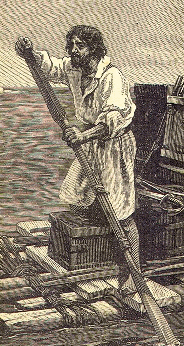
"I will make a raft (я сделаю плот)." I said to myself (сказал я себе).
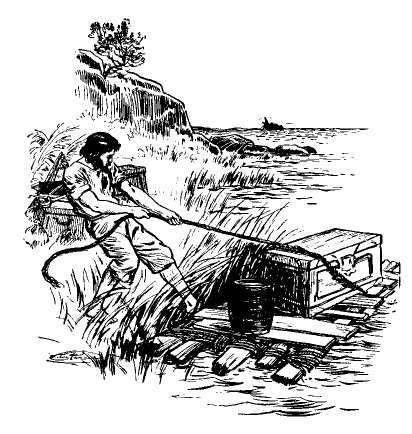
There were several long pieces of timber on the deck (на палубе было несколько длинных кусков дерева = бревен; timber — лесоматериалы; строевой лес; древесина; деревянный брус, бревно; балка). I tied a rope to each of these (я привязал веревку к каждому из них) so that it would not float away (чтобы оно /бревно/ не уплыло). Then I dropped them (затем я скинул их), one by one (одно за другим), over the ship’s side (за борт корабля).
After this I slid down my rope into the water (после этого я спустил мою веревку в воду; to slide — скользить; совать), and tied these timbers together (и связал эти бревна). They formed a framework (они образовали каркас; frame, framework — скелет, костяк, каркас, остов) that was strong (который был прочным) and would not sink (и не потонул бы).
On top of this framework I laid all the boards I could find (поверх каркаса я положил все доски, которые смог найти; top — верхушка, вершина).
I now had a very good raft (теперь у меня был очень хороший плот). It was large enough (он был достаточно большой) to carry a great many things (чтобы везти/нести очень много вещей). All the time I was building it (все время, пока я строил его) I was planning how to load it (я планировал, как нагрузить его).
In the cabin there were three strong boxes (в каюте было три тяжелые ящика), such as sailors use (такие, какими пользуются моряки). These I emptied (эти я опустошил). Then I carried them out and let them down upon my raft (затем я вынес их и спустил вниз на плот).
Of all the things on board (из всех вещей на борту), I would need food the most (мне больше всего будет необходима еда). So I filled the first chest (поэтому я наполнил первый ящик; chest — ящик; коробка, сундук; вместилище) with bread, rice, cheese, and a few pieces of meat (хлебом, рисом, сыром и несколькими кусками мяса).
I found also a small bag of grain (я также нашел маленький мешок зерна), of which I took good care (который я бережно забрал: «о котором взял хорошую заботу = хорошо позаботился»). It was barley (это был ячмень).
Then I began to look around for clothing (затем я начал искать одежду), and found enough to do for many a day (и нашел достаточно, чтобы хватило на много дней).
While I was getting these together (пока я собирал эти /вещи/) I happened to see the carpenter’s chest (мне посчастливилось увидеть плотницкий ящик). It was full of tools (он был полон инструментов).
It was hard work to get it on the raft (это была тяжелая работа — доставить его на плот). I lifted and pulled (я поднимал и тянул/тащил). I pulled and lifted; and at last I had it alongside of the other boxes (и наконец я имел его рядом с другими ящиками = мне удалось доставить его туда же, где были и другие ящики). How tired I was (каким уставшим я был = как же я устал)!
store [stO:], touch [tAtS], hungry ['hANgrI], pocket ['pOkIt], dry ['draI], biscuit ['bIskIt], ate ['eIt, et], raft [rQ:ft], together [tq'geDq], use /глаг./ ['ju:z], bread [bred], meat [mi:t], barley ['bQ:lI], clothing ['klquDIN], carpenter ['kQ:p(q)ntq], pull [pul]
I MAKE ME A RAFT
THERE was a great deal of water in the ship’s hold. But the cabin and the storerooms were dry. The boxes of food had not been touched by the water.
I was very hungry, but I had no time to lose. So I filled my pockets with dry biscuits and ate them as I went about.
There were many things on the ship. They might be very useful to me if I had them on shore. But there was no boat, and how could I carry them there?
"I will make a raft." I said to myself.
There were several long pieces of timber on the deck. I tied a rope to each of these so that it would not float away. Then I dropped them, one by one, over the ship’s side.
After this I slid down my rope into the water, and tied these timbers together. They formed a framework that was strong and would not sink.
On top of this framework I laid all the boards I could find.
I now had a very good raft. It was large enough to carry a great many things. All the time I was building it I was planning how to load it.
In the cabin there were three strong boxes, such as sailors use. These I emptied. Then I carried them out and let them down upon my raft.
Of all the things on board, I would need food the most. So I filled the first chest with bread, rice, cheese, and a few pieces of meat.
I found also a small bag of grain, of which I took good care. It was barley.
Then I began to look around for clothing, and found enough to do for many a day.
While I was getting these together I happened to see the carpenter’s chest. It was full of tools.
It was hard work to get it on the raft. I lifted and pulled. I pulled and lifted; and at last I had it alongside of the other boxes. How tired I was!
I CARRY SOME THINGS ASHORE (я приношу некоторый вещи на берег)
IT was now past noon (было уже время после полудня), and the tide was coming in (и прилив приближался). I could not stop to rest (я не мог остановиться отдохнуть).
"I have food, I have clothing, I have tools (у меня есть еда, у мнея есть одежда, у меня есть инструменты)," I said to myself (сказал я себе). "What do I need next (что мне нужно следующим = теперь/еще)?"
Then I thought of the wild animals (затем я подумал о диких животных) and wild men (и диких людях) that I might meet on the shore (которых я мог встретить на берегу). "How shall I protect myself from them (как я буду защищать себя от них)?" I said.
In the captain's room I found two good guns (в комнате капитана я нашел два хороших ружья) with a bag of shot and a powderhorn (с сумкой дроби и пороха; bag — мешок; сумка). There were also two old swords (там были также две старые шпаги), very rusty and dull (очень ржавые и тупые), and a pair of big pistols (и пара больших пистолетов).
By looking around (осмотревшись), I found also three small kegs of powder (я обнаружил также три маленьких бочонка пороха; keg — бочонок /емкостью до 10 галлонов2/; a powder keg — пороховой бочонок). Two of these were dry (два из них были сухими), but the other was wet (но другой был мокрым) and good for nothing (и ни на что не годился: «и хороший для ничего»).
It took more than an hour to get all these safely placed on my raft (заняло больше часа уложить все это в сохранности на мой плот; safely — в сохранности; безопасно; благополучно). I now had quite a heavy load (у меня теперь была довольно тяжелая поклажа), and I began to wonder (и я начал задаваться вопросом; to wonder — удивляться; интересоваться; размышлять) how I should take it to the shore (как я должен доставить это на берег).
I had no oars nor any sail for my raft (у меня не было ни весел, ни паруса для моего плота). But the water was smooth (но вода была гладкой), the tide was flowing in (и был прилив: «поток приливал»), and a gentle wind was blowing toward the land (и тихий ветер дул по направлению к суше).
I loosed the rope (я ослабил веревку) that held the raft to the ship (которая держала плот к кораблю = которой плот был привязан к кораблю), and soon began my little voyage (и скоро начал мое маленькое путешествие).
The tide was now so high (прилив был сейчас столь высоким) that the dry land was much farther away (что суша была намного дальше) than when I came out (чем когда я отправился: «вышел» к кораблю). But the raft floated smoothly along (но плот плыл ровно; to go along — двигаться вперед), and drew nearer and nearer to the shore (и приближался ближе и ближе к берегу; to draw — тащить; тянуть; подходить, приближаться).
Just as I thought myself safe (как только я подумал, что я в безопасности), I found that I was entering a strong current (я обнаружил, что вхожу в сильное течение) which carried me into a narrow bay (которое относит меня в узкий залив) far from my first landing place (вдалеке от моего первого места «приземления» = прибытия /на берег/).
There the raft stuck fast (там плот застрял; to stick — торчать; застревать; fast — крепко) on an ugly sand bar (на ужасной песчаной отмели; ugly — безобразный, уродливый; мерзкий; скверный), and was like to be tipped over (и был готов быть перевернутым = перевернуться).
But the tide was still rising (но прилив все поднимался). Soon the raft floated free (вскоре плот поплыл свободно) and glided slowly along again with the current (и снова медленно скользил по течению: «с течением»).
In a short time I found that I was being carried up (через короткое время я обнаружил, что меня несло: «я был несом») into a little river with high banks on each side (в маленькую речку с высокими берегами на каждой стороне).
With a piece of plank for an oar (с куском доски = с доской вместо весла; plank — толстая и широкая гладко оструганная доска, планка) I pushed the raft toward the shore on my right (я толкнул плот к берегу справа). The water was now so shallow (вода была теперь столь мелкой) that I could reach the bottom (что я мог достать до дна).
The raft floated slowly onward (плот медленно плыл вперед) until it reached a little cove (пока не достиг маленькой бухточки) into which I pushed it (в которую я втолкнул его). The water there was quite still (вода была там вполне тихой/неподвижной).
I looked around for a place to land (я осмотрелся, ища место, чтобы пристать к берегу). But the banks were steep (но берега были отвесными), and if I ran one end of my raft upon the shore (и если бы я наехал одним концом моего плота на берег), the other end might sink so low as to slide all my goods into the water (другой конец мог опуститься/погрузиться так низко, что /мог/ сбросить/уронить все мои товары в воду; to slide — скользить; совать; зд. сбросить, дать соскользнуть).
The best I could do was to wait (самое лучшее, что я мог сделать, это ждать) till the tide was at its highest (пока прилив не достигнет максимальной высоты: «был при своем наивысшем»). Then I might push a little farther inland (тогда я мог толкнуть немного дальше от моря; inland — вглубь страны/суши) where the bank was somewhat lower (где берег был несколько ниже).
This I did (это я сделал = так я и сделал).
The tide rose higher and higher (прилив поднимался /все/ выше и выше). At last, to my joy (наконец, к моей радости), the water reached the top of the bank (вода достигла вершины берега). It covered a level spot of ground beyond (она покрыла ровную/плоскую полосу земли за этой вершиной; level — уровень; плоский, ровный; spot — пятнышко; крапинка; небольшой участок местности; beyond — за, по ту сторону).
I waited a little longer (я подождал немного дольше). The water on the level space was a foot deep (вода на ровном месте была в фут глубиной). The tide was beginning to flow out (поток стал отступать: «вытекать» = начался отлив).
With all my might I pushed the raft into this shallow place (со всей своей силой я толкнул плот на мелкое место). The tide ebbed fast (поток отступил быстро). Soon the raft was left high and dry on the land (вскоре плот был оставлен высоко и сухим на земле).
It was easy now to unload the goods (теперь было легко разгрузить товар/добро) and carry them to a safe place (и отнести его в безопасное место).
past [pQ:st], food [fu:d], wild ['waIld], animal ['xnIm(q)l], might ['maIt], protect [prq'tekt], gun [gAn], powder ['paudq], sword [sO:d], pair ['peq], pistol [pIstl], oar [O:], smooth [smHD], gentle [Gentl], current ['kAr(q)nt], reach [ri:tS], push [puS], cove [kquv], beyond [bI'jOnd], level ['lev(q)l], shallow ['Sxlqu]
I CARRY SOME THINGS ASHORE
IT was now past noon, and the tide was coming in. I could not stop to rest.
"I have food, I have clothing, I have tools," I said to myself. "What do I need next?"
Then I thought of the wild animals and wild men that I might meet on the shore. "How shall I protect myself from them?" I said.
In the captain's room I found two good guns with a bag of shot and a powderhorn. There were also two old swords, very rusty and dull, and a pair of big pistols.
By looking around, I found also three small kegs of powder. Two of these were dry, but the other was wet and good for nothing.
It took more than an hour to get all these safely placed on my raft. I now had quite a heavy load, and I began to wonder how I should take it to the shore.
I had no oars nor any sail for my raft. But the water was smooth, the tide was flowing in, and a gentle wind was blowing toward the land.
I loosed the rope that held the raft to the ship, and soon began my little voyage.
The tide was now so high that the dry land was much farther away than when I came out. But the raft floated smoothly along, and drew nearer and nearer to the shore.
Just as I thought myself safe, I found that I was entering a strong current which carried me into a narrow bay far from my first landing place.
There the raft stuck fast on an ugly sand bar, and was like to be tipped over.
But the tide was still rising. Soon the raft floated free and glided slowly along again with the current.
In a short time I found that I was being carried up into a little river with high banks on each side.
With a piece of plank for an oar I pushed the raft toward the shore on my right. The water was now so shallow that I could reach the bottom.
The raft floated slowly onward until it reached a little cove into which I pushed it. The water there was quite still.
I looked around for a place to land. But the banks were steep, and if I ran one end of my raft upon the shore, the other end might sink so low as to slide all my goods into the water.
The best I could do was to wait till the tide was at its highest. Then I might push a little farther inland where the bank was somewhat lower.
This I did.
The tide rose higher and higher. At last, to my joy, the water reached the top of the bank. It covered a level spot of ground beyond.
I waited a little longer. The water on the level space was a foot deep. The tide was beginning to flow out.
With all my might I pushed the raft into this shallow place. The tide ebbed fast. Soon the raft was left high and dry on the land.
It was easy now to unload the goods and carry them to a safe place.
I LEARN THAT I AM ON AN ISLAND (я узнаю, что я на острове)
THE sun was still two hours high (солнце показывало еще только два часа). I was very tired after my day's work (я был очень усталым после дневной работы), but I could not rest (но не мог отдыхать). I wanted to know what sort of place I was in (я хотел знать, в какого рода месте я был). I wondered whether I was on an island or on a continent (я задавался вопросом, был ли я на острове или на материке).
About half a mile from the shore there was a large hill (примерно в половине мили от берега был большой холм). It was steep and high (он был крутой и высокий) and seemed to overlook all the country (и, казалось, обозревает всю местность = возвышается над всей местностью).
I thought that if I could get to the top of that hill (я подумал, что если бы я мог добраться до вершины того холма) I might see what kind of country I was in (я смог бы увидеть, в какой местности я был: «в какого рода местности…»).
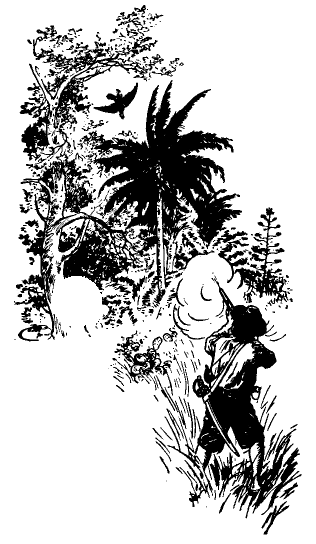
So I put one of the pistols in my belt (поэтому я сунул один из пистолетов за ремень), and one of the guns on my shoulder (а одно из ружей /положил/ на плечо; to put — помещать, класть). I also hung the powder-horn (я также повесил пороховницу, сделанную из рога; powder — порошок; порох; horn — рог) on my neck (на шею) and put a handful of small shot in my pocket (и положил горсть маленькой дроби в карман).
Thus armed (так вооруженный), I set out for the big hill (я отправился к большому холму).
There were but a few shrubs or trees in my way (на моем пути было только несколько кустов или деревьев), and the walking was easy (и ходьба была легкой = и путь был нетрудным). In less than a quarter of an hour I was at my journey's end (менее чем через четверть часа я закончил поход: «я был при конце моего путешествия»).
The sides of the hill were not rough (склоны холма были не неровными = довольно гладкими; rough — грубый; жесткий; неровный), but they were quite steep (но они были довольно крутыми).
Soon I was at the very top (вскоре я был на самой вершине). What a grand lookout it was (какое потрясающее зрелище: «обзор, панорама» это было)!
North, south, east, west (север, юг, восток, запад), the land and the sea were spread out before me (земля и море были распростерты передо мной).
The sea did I say (я сказал «море»)?
Yes, I was on an island, and the sea was all around (да, я был на острове, и море было везде вокруг = со всех сторон).
No other land was in sight (не было другой земли/суши в пределах видимости) except two small islands and some great rocks (за исключением двух маленьких островов и нескольких больших скал/рифов) that lifted themselves out of the water (которые поднимались: «поднимали себя» из воды).
I saw that my island was not very large (я увидел, что мой остров был не очень большим). Perhaps it was ten miles broad (возможно, он был десять миль шириной); perhaps it was twenty (возможно, это было двадцать /миль/). I had no good idea of distances (я не имел четкого представления о расстояниях).
There was no house nor sign of life anywhere (не было ни дома, ни признака жизни нигде; sign — знак, признак). There might be wild beasts in the woods (должно быть, в лесу были дикие звери: «могли быть дикие звери в лесу»); but I was sure that no men lived there (но я был уверен, что никакие люди там не жили).
The thought of being alone (мысль о том, что я был один: «мысль бытия одним») on a desert island (на пустынном острове) made me feel very sad (заставила меня почувствовать себя очень грустно).
I should have been glad at that moment (я должен был бы быть рад = должно быть, был бы рад в то мгновение) to see even the face of a savage (увидеть даже лицо дикаря).
But I dared not stay long on the hilltop (но я не решился оставаться долго на вершине холма). I hurried to get back to my raft (я поспешил добраться обратно до плота) before the sun should go down (пока не зашло солнце).
At the foot of the hill I saw a great bird sitting in a tree (у подножия холма я увидел большую птицу, сидящую на дереве). I thought it to be some kind of a hawk (я подумал, что это какой-то вид ястреба) and shot it (и подстрелил ее; to shoot — стрелять).
The sound of the gun echoed strangely among the rocks and trees (звук отдался cтранным эхом среди скал и деревьев). Never before had such a sound been heard there (никогда раньше такой звук не слышался: «не был слышим» там).
I picked up the bird (я подобрал птицу).
It was no hawk (это был не ястреб). It had no sharp claws nor hooked beak (у нее не было ни острых когтей, ни клюва крючком). Its flesh was unfit to eat (ее мясо было непригодным для еды; flesh — плоть; мясо), and I threw it away (и выбросил ее; to throw — бросать; to throw away — выбрасывать; away — прочь).
The sun had set and it was almost dark (солнце зашло, и было почти темно) when I got back to the inlet (когда я добрался обратно до бухты; inlet — узкий морской залив; фиорд, небольшая бухта) where my raft was lying (где лежал мой плот). I did not know where to go for the night (я не знал, куда пойти на ночь), nor where to find a resting place (ни где найти место для отдыха/привала; to rest — отдыхать; покоиться).
But the day being gone (но, так как день прошел), there was no time for thinking (не было времени на раздумья).
I made a kind of hut (я сделал = соорудил подобие лачуги; kind — сорт, разновидность; разряд; вид, класс, род) with the chests (из ящиков) and the loose boards from the raft (и отдельных/разрозненных досок с плота; loose — свободный; непривязанный, неприкрепленный). Then I crept inside (влез внутрь; to creep — ползти; пробираться) and lay down to rest (и лег отдохнуть; to lie — лежать; to lie down — ложиться; to rest — отдыхать; покоиться).
For a little while (в течение небольшого времени; while — промежуток времени) I listened to every sound (я прислушивался к каждому звуку). At length I fell asleep (наконец я заснул; to fall asleep — засыпать) and knew nothing more until broad daylight the next morning (и не узнал ничего больше до яркого дневного света следующим утром = забылся сном и проснулся, когда было уже совсем светло).
hour ['auq], island ['aIlqnd], continent ['kOntInqnt], half [hQ:f], overlook ["quvq'luk], country ['kAntrI], thus [DAs], journey ['Gq:nI], rough [rAf], spread [spred], distance ['dIstqns], sign ['saIn], live [lIv], hawk [hO:k], heard [hq:d], hook [huk], beak [bi:k], threw [TrH], listen ['lIs(q)n], asleep [q'slJp]
I LEARN THAT I AM ON AN ISLAND
THE sun was still two hours high. I was very tired after my day's work, but I could not rest. I wanted to know what sort of place I was in. I wondered whether I was on an island or on a continent.
About half a mile from the shore there was a large hill. It was steep and high and seemed to overlook all the country.
I thought that if I could get to the top of that hill I might see what kind of country I was in.
So I put one of the pistols in my belt, and one of the guns on my shoulder. I also hung the powder-horn from my neck and put a handful of small shot in my pocket.
Thus armed, I set out for the big hill.
There were but a few shrubs or trees in my way, and the walking was easy. In less than a quarter of an hour I was at my journey's end.
The sides of the hill were not rough, but they were quite steep.
Soon I was at the very top. What a grand lookout it was!
North, south, east, west, the land and the sea were spread out before me.
The sea did I say?
Yes, I was on an island, and the sea was all around.
No other land was in sight except two small islands and some great rocks that lifted themselves out of the water.
I saw that my island was not very large. Perhaps it was ten miles broad; perhaps it was twenty. I had no good idea of distances.
There was no house nor sign of life anywhere. There might be wild beasts in the woods; but I was sure that no men lived there.
The thought of being alone on a desert island made me feel very sad.
I should have been glad at that moment to see even the face of a savage.
But I dared not stay long on the hilltop. I hurried to get back to my raft before the sun should go down.
At the foot of the hill I saw a great bird sitting in a tree. I thought it to be some kind of a hawk and shot it.
The sound of the gun echoed strangely among the rocks and trees. Never before had such a sound been heard there.
I picked up the bird.
It was no hawk. It had no sharp claws nor hooked beak. Its flesh was unfit to eat, and I threw it away.
The sun had set and it was almost dark when I got back to the inlet where my raft was lying. I did not know where to go for the night, nor where to find a resting place.
But the day being gone, there was no time for thinking.
I made a kind of hut with the chests and the loose boards from the raft. Then I crept inside and lay down to rest.
For a little while I listened to every sound. At length I fell asleep and knew nothing more until broad daylight the next morning.